

Can You Spot the Fake? Why AI Literacy Is Every Brand’s New Superpower

Can You Spot the Fake? Why AI Literacy Is Every Brand’s New Superpower

Can You Spot the Fake? Why AI Literacy Is Every Brand’s New Superpower

How CPG brands can protect their image in an AI-generated age

Dec 16, 2025

Dec 16, 2025

10 Minute Read

TLDR;

Strategy

AI

Design

AI literacy is now a must-have skill for e-commerce creative teams. With synthetic influencers, fake AI images, and auto-generated content flooding the market, customers spot the fakes faster than you think. This guide covers how to identify common AI artifacts, protect brand authenticity, and build quality checks into your creative pipeline.
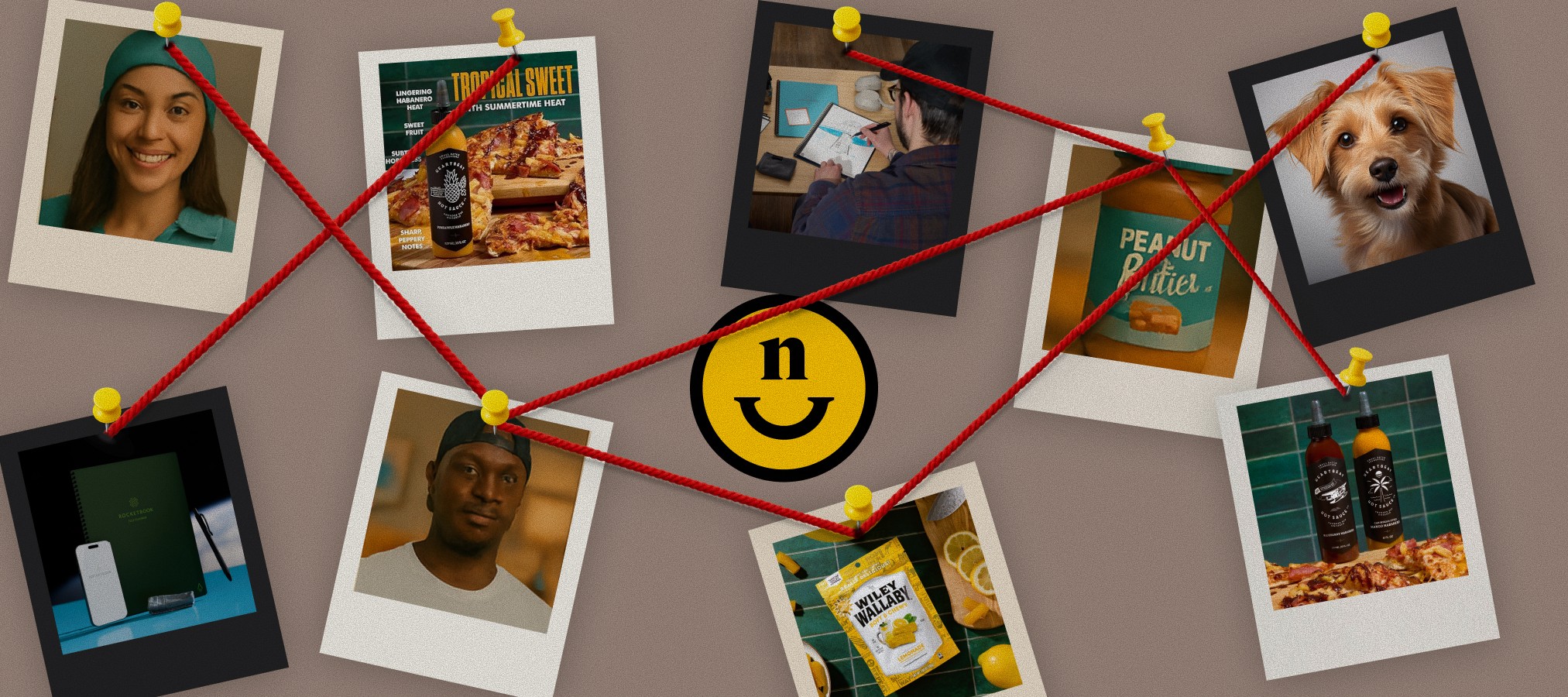
Collage showing AI-generated product imagery versus real photography, with labels highlighting verification by humans and the concept of spotting fake AI content

You've probably noticed it by now. Scroll your feed for five minutes, and you'll spot it: a "brand founder" who never seems to blink. A product shot where the reflections don't quite obey physics. A glowing review that reads just a little too… templated.


Welcome to the CSI: Content era!

In 2023, that felt like a novelty. In CPG marketing 2025, it’s the day-to-day reality: AI-generated images, videos, and copy quietly blending into everything your customers see.


The problem? Customers are catching on. They’re learning the tells. They’re sharing side-by-side screenshots in group chats. And when they sniff out something fake (a weird hand, a warped logo, an AI influencer who never ages), they don’t just doubt the asset. They doubt you.


That’s where AI literacy comes in. Not as a buzzword. Not as “we have a tool for that.” But as a core competency for your ecommerce creative teams, brand managers, and agencies.


Neato lives in the middle of this shift every day. We produce PDP images, Amazon SBV, A+ content, and social creative across categories. We use AI. We love AI. But we treat it like any powerful tool: useful only when paired with human judgment, rigorous QA, and a ruthless commitment to brand authenticity.


Think of this guide as your media-savvy detective manual: a little bit CSI, a little bit creative lab, built to help you spot fakes, prevent missteps, and turn AI literacy into a genuine competitive edge on the digital shelf.

The AI Literacy Plot Twist (And Why It’s Now Everyone’s Job)
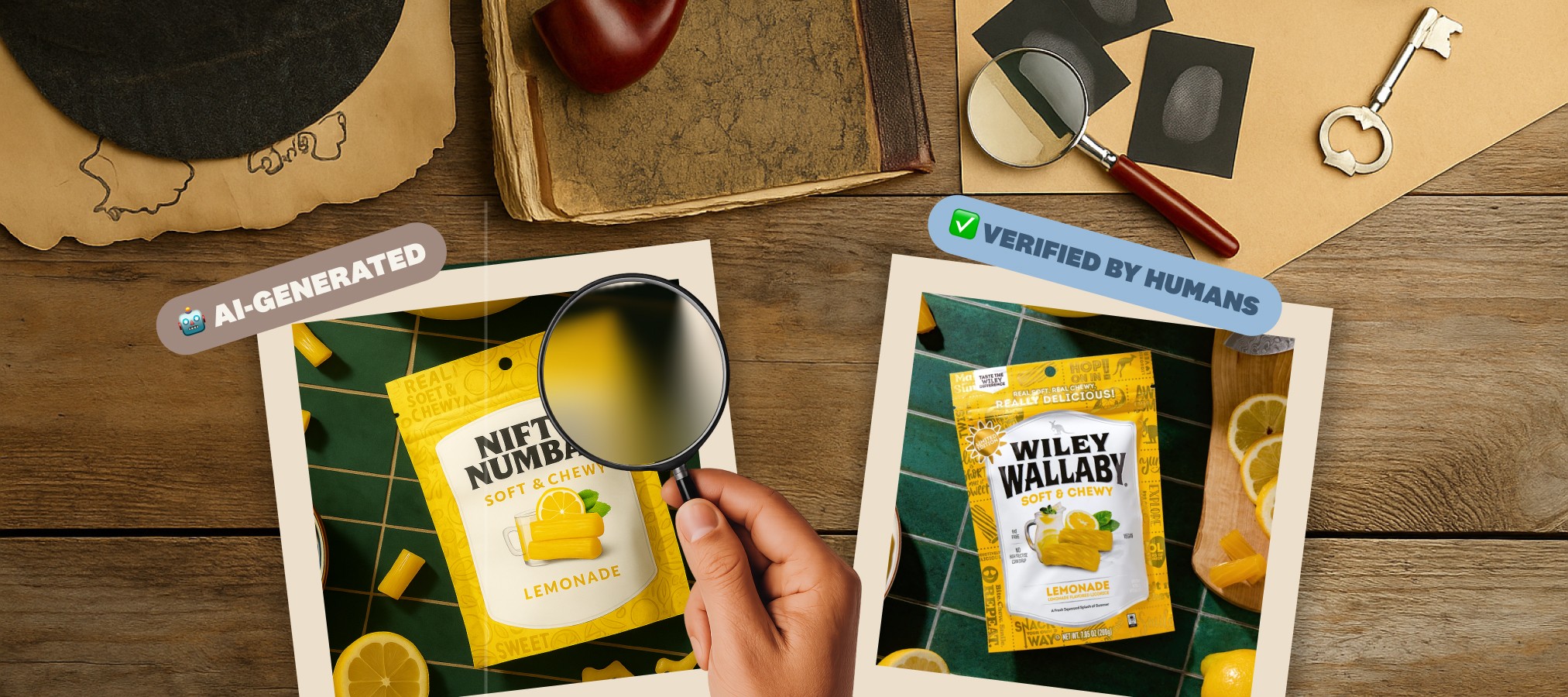
Side-by-side comparison of AI-generated candy packaging and real product photography, shown through a magnifying glass to highlight visual differences

AI literacy used to be “something the tech team worries about.” Now it’s table stakes for:

  • Brand managers approving campaign concepts

  • Creative directors reviewing storyboards and visuals

  • E-commerce teams uploading assets to Amazon, Walmart, and DTC

  • Agencies and freelancers generating content at speed


At a basic level, AI literacy for e-commerce and CPG teams means three things:

  1. Understanding how AI content is made

    • Generative models remix patterns from massive datasets.

    • They’re great at approximating “the vibe” but not always the details (like hands, labels, or regulatory fine print).

  2. Knowing how to spot AI artifacts

    • Weird textures, impossible lighting, text that melts, hands that don’t add up, “floaty” objects.

    • Language that feels generic, repetitive, or emotionally empty.

  3. Building workflows to verify what you publish

    • AI detection tools are helpful but not infallible.

    • The real magic is in trained humans + smart tools + clear brand standards.


This isn’t about being anti-AI. It’s about being pro-truth and pro-brand. AI is incredible at helping teams brainstorm, storyboard, and even prototype visuals at speed. But when it’s time to ship? That’s where literacy and e-commerce media integrity matter more than ever.

How to Spot Fake AI Images, Video, and Text

Creative team in a meeting room discussing AI literacy, with a large screen showing facial recognition and digital interface graphics behind them

You don’t need a PhD in computer vision to catch most fake AI images. You just need a trained eye and a simple checklist.


Visual Red Flags in AI Images


When our post-production team reviews AI-assisted visuals, we zoom in on a few usual suspects:


1. Hands, limbs, and overlaps

  • Too many fingers, vaguely melted knuckles, or wrist angles that defy human anatomy

  • Objects “passing through” hands instead of being gripped

  • Hair, straps, or clothing passing through other objects


2. Text and logos

  • Wobbly or inconsistent letterforms

  • Misspellings or half-formed letters on packaging

  • Logos that look almost right but not quite — especially in reflections or background objects


3. Lighting and reflections

  • Highlights that don’t match the stated light direction

  • Reflections that show different objects or incorrect angles

  • Metal or glass that looks like CGI when the rest of the scene feels “photographic”


4. Background noise

  • Overly “perfect” depth of field where everything feels soft and painted

  • Background figures or products that blur into nonsense when you zoom in

For video, the same cues apply, plus:

  • Micro-glitches in motion (hair, jewelry, labels flickering)

  • Lip sync that feels slightly off in synthetic influencers

  • Shadows that crawl or warp frame to frame

For text, AI artifacts show up as:

  • Overly generic, “corporate-safe” language with no real point of view

  • Repetition of the same sentence patterns or adjectives

  • Claims that sound bold but are not backed by specifics

The goal isn’t to ban AI visuals. It’s to train your team to see what your customers will see, because if they’re zooming, screenshotting, and asking, “Is this real?”, your brand is already on trial.

When AI Backfires on Brand Safety (Especially in CPG)
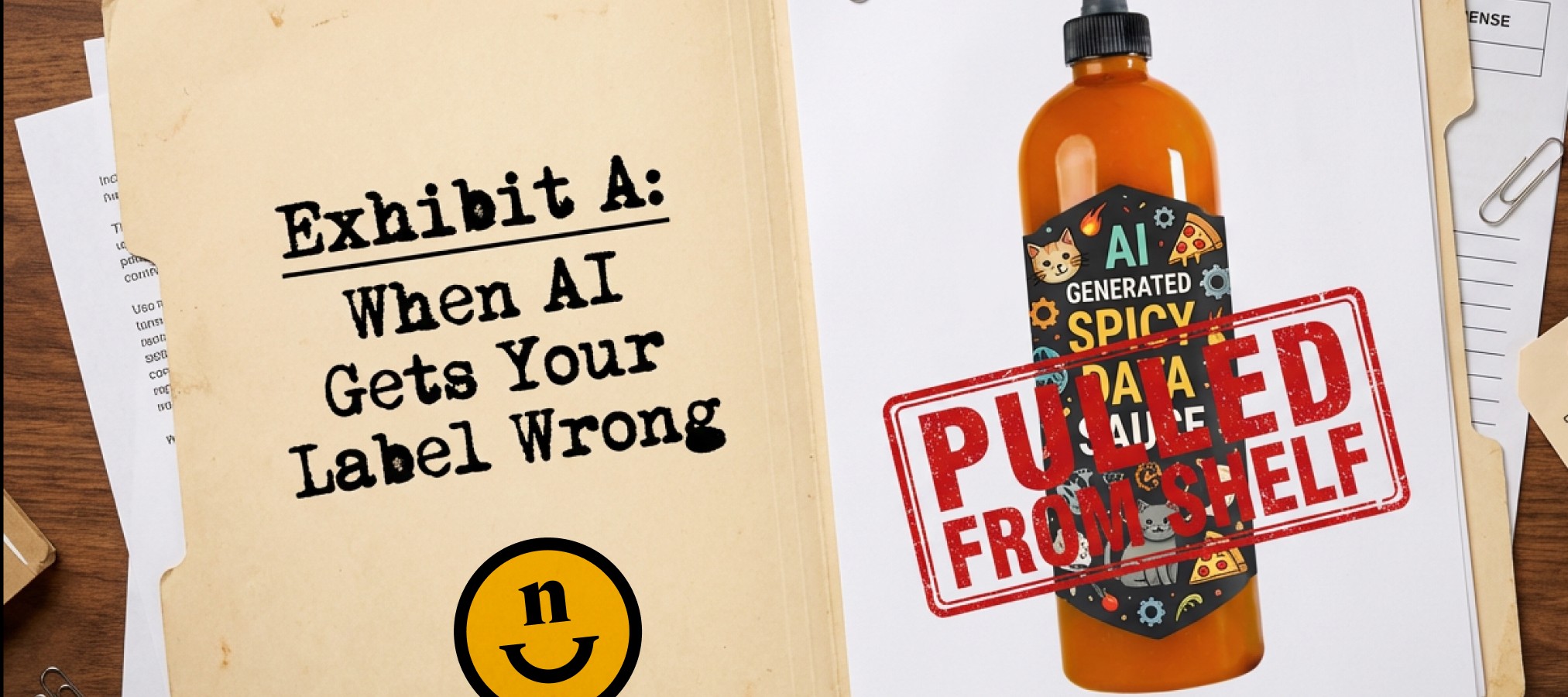
Mock legal exhibit showing an AI-generated product label marked “pulled from shelf,” illustrating risks of incorrect AI content in ecommerce

For CPG and retail brands, the stakes are higher than “that looks weird.” Unvetted AI assets can create real risk:


1. Compliance & Regulatory Headaches


If AI quietly changes a:

  • Nutrition label

  • Allergen callout

  • Dosage or usage instructions


…you’re now misrepresenting your product in ways that regulators and retailers care about. Even small discrepancies between packaging and imagery can raise questions about AI brand safety and compliance.


2. Erosion of Digital Brand Trust


Your shoppers may not know the word “model artifact,” but they absolutely know when something feels off. If they catch one fake:

  • They start questioning other images.

  • They grow skeptical of claims that look overly polished.

  • They hesitate at checkout…or worse, they “quote tweet” you with a sarcastic callout.


Trust takes years to build and seconds to screenshot.


3. Retail & Marketplace Risk


Retailers and marketplaces already care about media verification and accurate representation. Sloppy AI assets can:

  • Get flagged for policy violations

  • Undermine your pitch to a retail buyer (“Are these real lifestyle shots?”)

  • Trigger rework and delays in your content pipeline

In other words, AI is not just a creative tool. It’s a risk vector. And the brands that treat it that way (and build controls accordingly) are the ones that stay out of trouble and out in front.

Inside Neato’s AI QC Workflow: How We Keep It Real
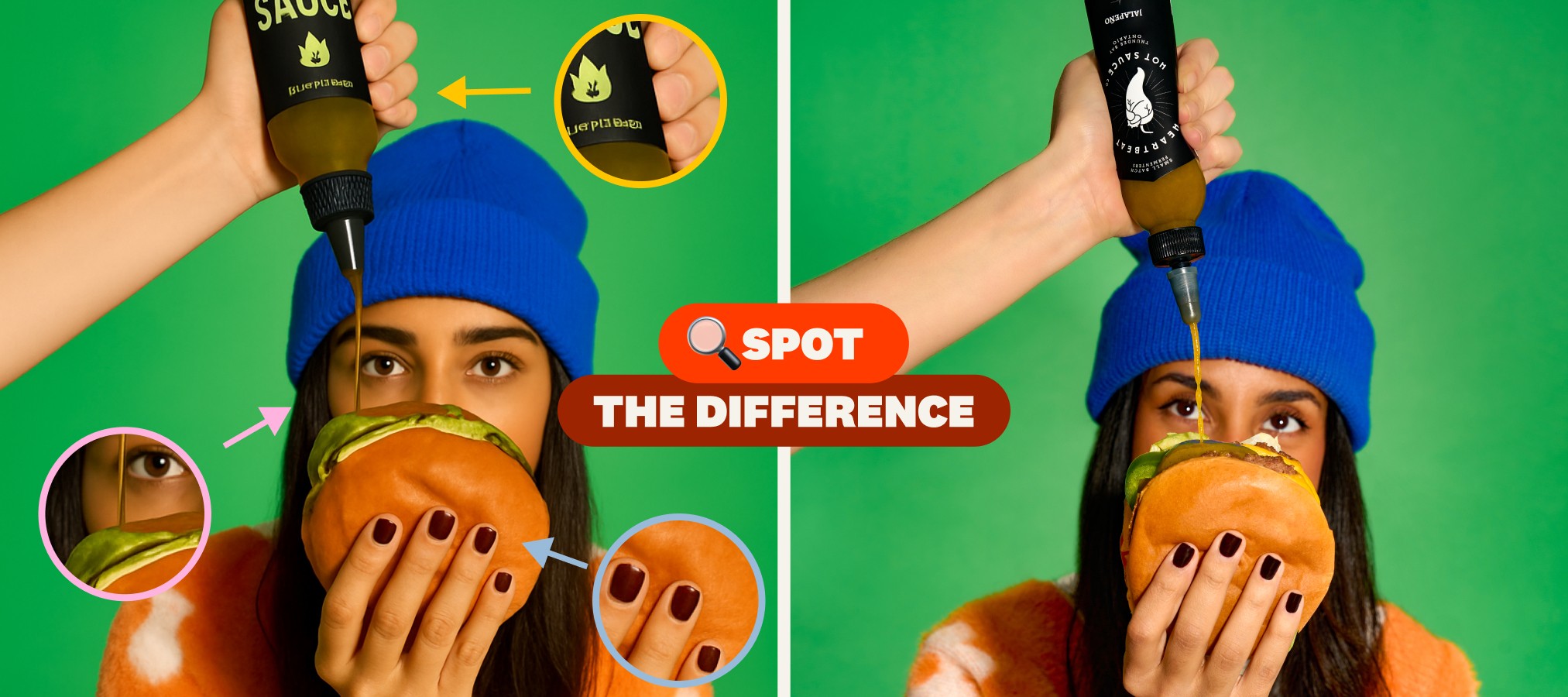
Split image comparing AI-generated food photography and real food photography, with visual callouts pointing to subtle differences in texture and detail

At Neato, we sit at the intersection of AI-powered content moderation, high-volume creative production, and ecommerce brand safety.

Our stance? AI can accelerate production. It should never lower your standards.

Here’s how our production and post-production teams integrate AI visual detection and authenticity checks into everyday work:


1. AI-Assisted, Human-Owned


We use AI tools to:

  • Rapidly explore visual directions and storyboards

  • Mock up lighting approaches for PDP and lifestyle imagery

  • Prototype “what if” concepts for campaigns

But any asset that touches a live listing (Amazon, Walmart, DTC, retail media) goes through human review. No exceptions.


2. Layered Quality Control


Neato’s QC process for AI-touched visuals typically includes:

  • Technical pass: Resolution, cropping, compression, color consistency across the asset set.

  • Brand pass: Does this align with brand guidelines, voice, and category expectations?

  • Authenticity pass: A dedicated check for AI artifacts (hands, labels, reflections, environments).

Where it makes sense, we also run assets through AI detection tools as a second opinion — not as a final verdict, but as a signal. If something gets flagged, it gets extra scrutiny.


3. Packaging & Claims Verification


For CPG, we’re especially strict about:

  • Label accuracy (ingredients, certifications, callouts)

  • Compliance copy visibility

  • Differences between physical packaging photos and any AI-augmented scenes

If AI touches a product or package, we compare it against actual photography and brand-approved source files before anything goes live.


4. Early In, Early Out


We encourage brands to bring Neato into the process early at the concept and script stage, not just at “we have assets, can you upload them?” That’s where we can:

  • Flag risky visual ideas before time and budget are sunk

  • Recommend where to use AI prototypes vs. high-fidelity physical production

  • Design content pipelines that are fast and trustworthy

The result: AI-powered workflows that still feel unmistakably human, grounded in the real products your customers buy and love.

Media Literacy as a Brand Differentiator
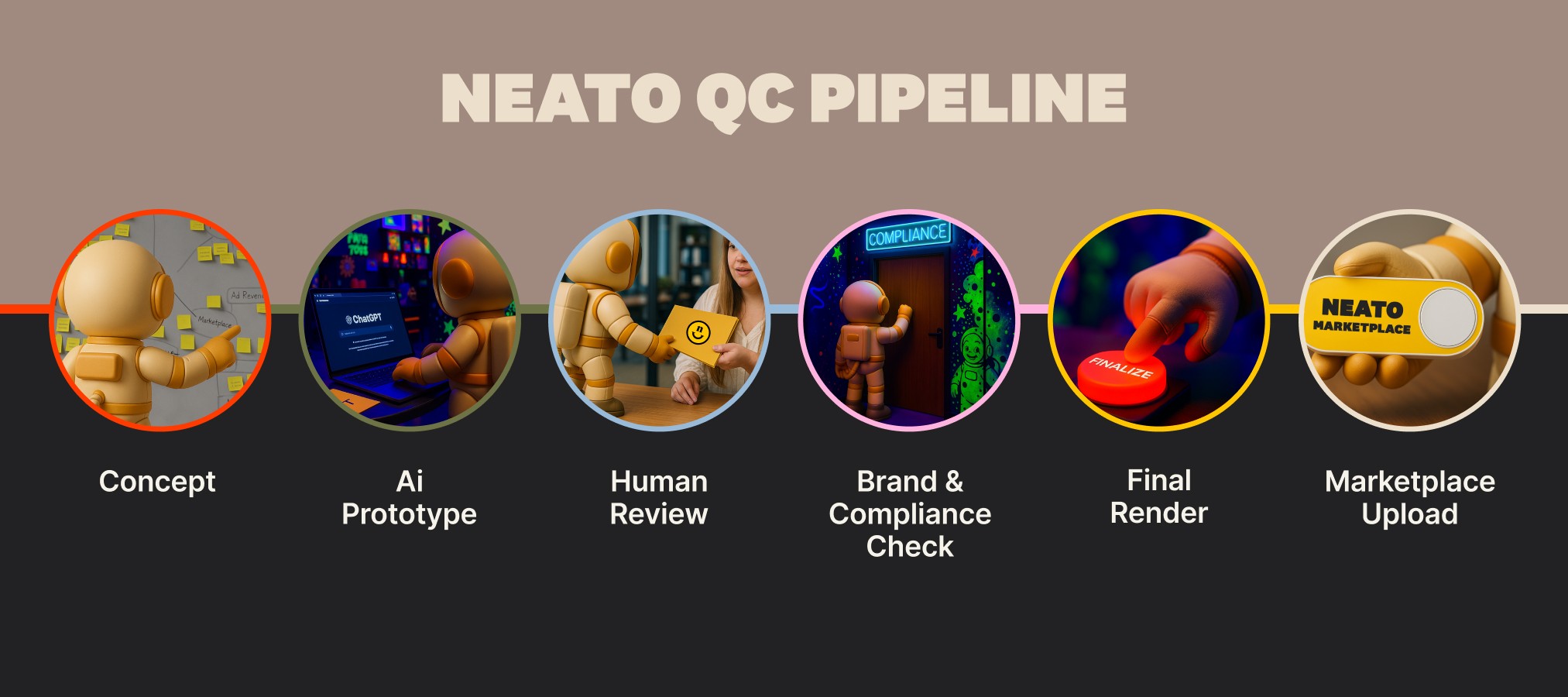
Diagram of the Neato QC pipeline showing steps from AI prototype to human review, brand compliance check, final render, and marketplace upload

Here’s the paradox: AI has made it easier than ever to make “good-looking” content — and harder than ever to build real digital brand trust.


When everything looks polished, what actually stands out?

  • Honest imperfection. Real hands, real homes, real textures.

  • Consistent truth. What you see in ads matches what shows up on the porch.

  • Transparency. Brands that are open about where and how they use AI.


In a sea of synthetic everything, media literacy becomes an asset your customers can feel — even if they don’t have the language for it.


Brands that invest in AI literacy training and ecommerce media integrity:

  • Catch issues early, before they become TikTok callouts.

  • Ship content that feels grounded, not uncanny.

  • Earn followers and repeat buyers who trust that what they see is what they’ll get.

This is where AI literacy shifts from “defensive posture” to offensive strategy: You’re not just avoiding landmines. You’re building an identity as a brand that respects your customers’ intelligence.

Your AI Literacy Playbook: How to Level Up This Quarter
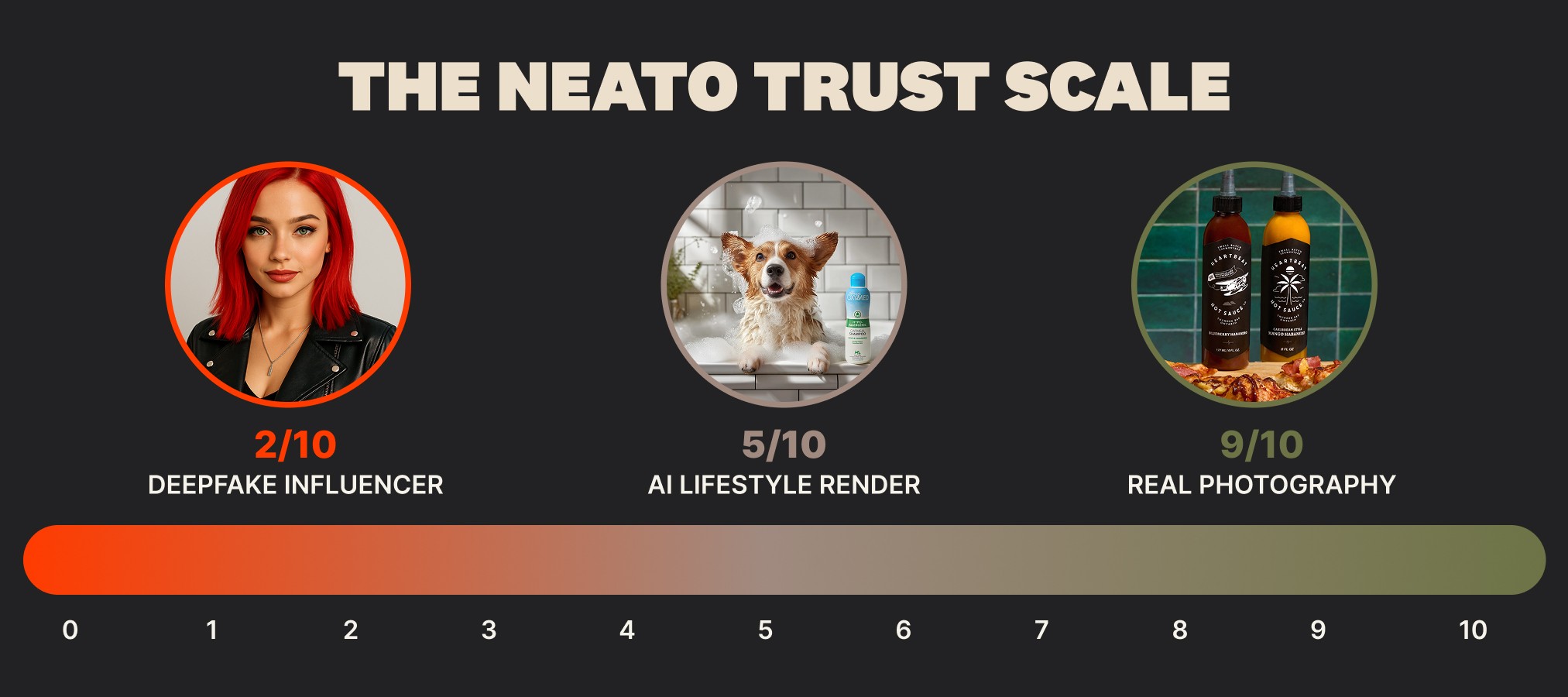
Neato trust scale graphic comparing deepfake influencer content, AI lifestyle renders, and real product photography by trust level

You don’t need to boil the ocean. You just need to start treating AI literacy like any other critical skill in your brand org. Here’s a simple framework to get moving:


Step 1: Define Your Red Lines


As a brand, decide:

  • Where AI is welcome (concepting, internal moodboards, low-stakes social content)

  • Where AI is limited or banned (regulatory-sensitive packaging shots, medical/health claims, before/after imagery)

  • Where AI must be clearly disclosed (synthetic influencers, conceptual “future vision” content)


Write it down. Put it in your creative brief templates and vendor guidelines.


Step 2: Build a Basic AI Artifact Checklist


Create a one-page checklist for everyone who touches creative:

  • Hands, limbs, overlaps checked

  • Logos and labels verified against brand source files

  • Text on packaging is legible and correct

  • Lighting and reflections are consistent

  • No “melting” objects or weird background figures

Make this part of your standard QA, just as you check spelling and logo usage.


Step 3: Train Your Team Like Detectives


Run a 1-hour AI literacy workshop with your e-commerce creative teams:

  • Show real vs. AI examples side by side

  • Have people guess which is which

  • Reveal the artifacts and patterns to look for

  • Walk through real examples from your own content library

You’ll be surprised how quickly people learn to see what they previously missed.


Step 4: Choose the Right AI Detection Tools (And Use Them Wisely)


Experiment with AI detection tools as part of your workflow, focusing on:

  • Image and video analysis for generative patterns

  • Text analysis for likely AI-generated copy

  • Layered checks for high-risk campaigns or categories


Remember: tools are signals, not judges. Final calls should come from a human with context, not a single “AI score.”


Step 5: Partner Where It Matters Most


If your internal team is already stretched, this is where a partner like Neato can help:

  • Designing AI-safe creative pipelines for e-commerce creative teams

  • Running authenticity checks on existing asset libraries


Building Amazon, Walmart, and DTC content that balances speed with brand authenticity.
AI isn’t going away. If anything, the volume of AI-generated everything is only going to increase: product shots, reviews, virtual influencers, even UGC.


The brands that win in that world won’t be the ones that use the most AI.

They’ll be the ones who use it most intelligently with:

  • Clear standards for authenticity

  • Teams trained to spot fakes and artifacts

  • Workflows where AI speeds things up but never quietly changes the truth

In other words, brands that treat AI literacy as a new superpower, not a nice-to-have.


At Neato, we help CPG brands pair cutting-edge tools with tried-and-true production craft, so your ecommerce content looks incredible and passes the sniff test from your most skeptical customers.


When your customers ask, “Can I trust what I’m seeing?”, your answer should always be yes and your content should prove it.


Want to pressure-test your current asset library for AI artifacts or build an AI-safe content workflow?
Let’s talk about how Neato can help your brand stay sharp, authentic, and ahead of the curve on every shelf you show up on.

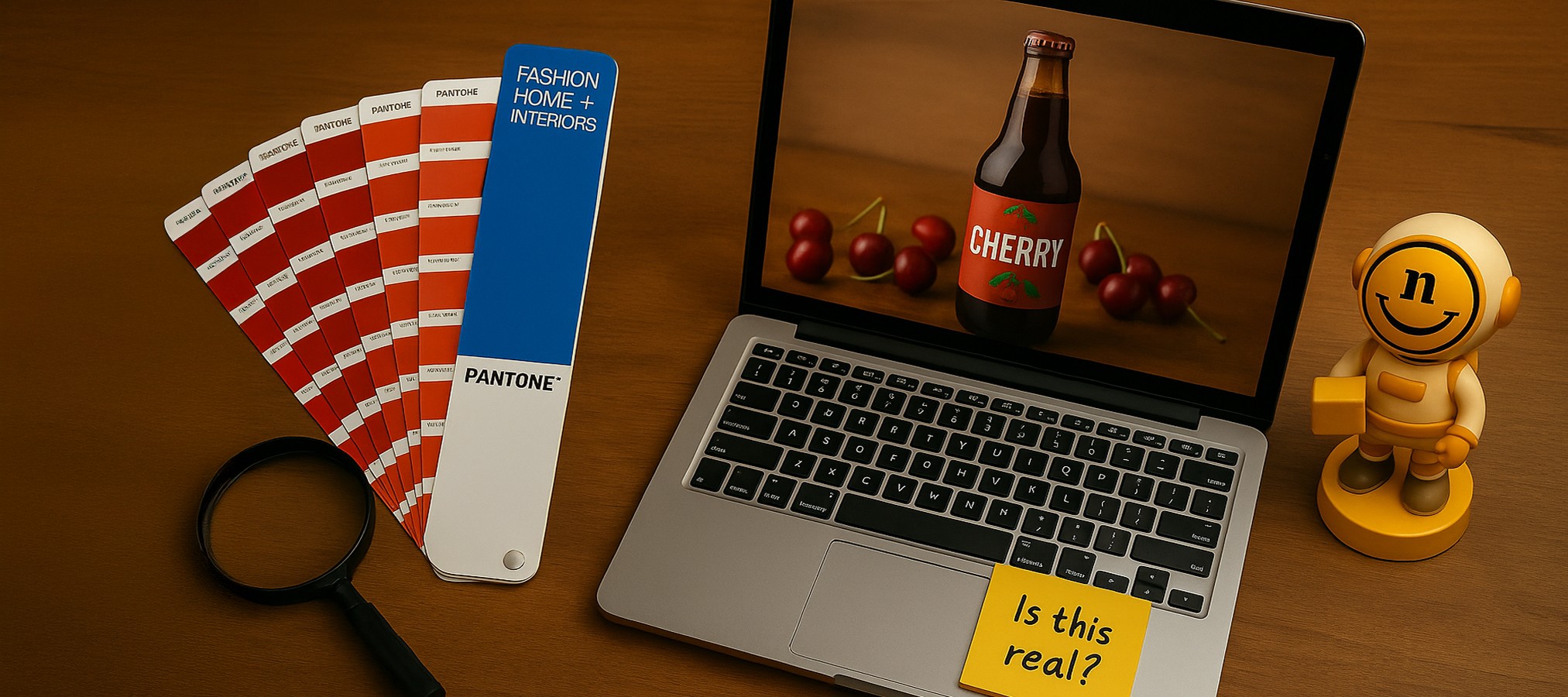
Laptop displaying a realistic product render beside Pantone color guides and a Neato character, questioning whether the image is real or AI-generated

Conclusion: The Future Belongs to the AI-Literate

Conclusion: The Future Belongs to the AI-Literate

Laptop displaying a realistic product render beside Pantone color guides and a Neato character, questioning whether the image is real or AI-generated

AI isn’t going away. If anything, the volume of AI-generated everything is only going to increase: product shots, reviews, virtual influencers, even UGC.


The brands that win in that world won’t be the ones that use the most AI.

They’ll be the ones who use it most intelligently with:

  • Clear standards for authenticity

  • Teams trained to spot fakes and artifacts

  • Workflows where AI speeds things up but never quietly changes the truth

In other words, brands that treat AI literacy as a new superpower, not a nice-to-have.


At Neato, we help CPG brands pair cutting-edge tools with tried-and-true production craft, so your ecommerce content looks incredible and passes the sniff test from your most skeptical customers.


When your customers ask, “Can I trust what I’m seeing?”, your answer should always be yes and your content should prove it.


Want to pressure-test your current asset library for AI artifacts or build an AI-safe content workflow?
Let’s talk about how Neato can help your brand stay sharp, authentic, and ahead of the curve on every shelf you show up on.

LET'S TALK 👋
LET'S TALK 👋

related articles

Design

Strategy

AI

  • 500M+ Amazon wins. You could be next. | All the services, one partner. 🚀 | We make Amazon ridiculously Neato. 😎 | Check out our work. You’ll want in. 🔥

5385 Wynn Dr.

Las Vegas, NV 89118

Viva Las Vegas! ️🤟

  • 500M+ Amazon wins. You could be next. | All the services, one partner. 🚀 | We make Amazon ridiculously Neato. 😎 | Check out our work. You’ll want in. 🔥

5385 Wynn Dr.

Las Vegas, NV 89118

Viva Las Vegas! ️🤟

  • 500M+ Amazon wins. You could be next. | All the services, one partner. 🚀 | We make Amazon ridiculously Neato. 😎 | Check out our work. You’ll want in. 🔥

5385 Wynn Dr.

Las Vegas, NV 89118

Viva Las Vegas! ️🤟

  • 500M+ Amazon wins. You could be next. | All the services, one partner. 🚀 | We make Amazon ridiculously Neato. 😎 | Check out our work. You’ll want in. 🔥

5385 Wynn Dr.

Las Vegas, NV 89118

Viva Las Vegas! ️🤟

  • 500M+ Amazon wins. You could be next. | All the services, one partner. 🚀 | We make Amazon ridiculously Neato. 😎 | Check out our work. You’ll want in. 🔥

5385 Wynn Dr.

Las Vegas, NV 89118

Viva Las Vegas! ️🤟

  • 500M+ Amazon wins. You could be next. | All the services, one partner. 🚀 | We make Amazon ridiculously Neato. 😎 | Check out our work. You’ll want in. 🔥

5385 Wynn Dr.

Las Vegas, NV 89118

Viva Las Vegas! ️🤟

  • 500M+ Amazon wins. You could be next. | All the services, one partner. 🚀 | We make Amazon ridiculously Neato. 😎 | Check out our work. You’ll want in. 🔥

5385 Wynn Dr.

Las Vegas, NV 89118

Viva Las Vegas! ️🤟