Author

8 minutes
TLDR;
Perfect single-frame shots don’t scale. Photo compositing is a strategic workflow that combines multiple elements into one image, delivering consistent visuals across SKUs, flawless fixes without reshoots, sharper detail than physics allows, and scalable creative that elevates perceived brand value.
In the competitive world of commercial and product photography, capturing a "perfect" single frame is often impossible or at least, incredibly expensive. Whether you're shooting for Amazon listings, social media campaigns, or high-end advertising, the demand for polished, hyper-creative imagery is higher than ever.
The pressure often pushes photographers toward "good enough" shots or blows the budget on elaborate set builds.
The issue isn't talent—it's physics.
When you try to capture everything in a single frame, three problems tend to follow:
Budget constraints - You can't always afford the perfect location.
Inconsistency - Shooting 50 SKUs over two days leads to lighting drift.
Destructive workflows - If the label is crooked, the shot is dead.
We approach high-end photography differently. We use compositing as a power tool that supports creative vision. It separates the limitations of reality from the possibilities of your creativity.
In this piece, we'll walk through 7 reasons why integrating composites into your workflow will elevate your photography and provide massive value to your clients.
Why Single-Frame Capture Limits Creative Control
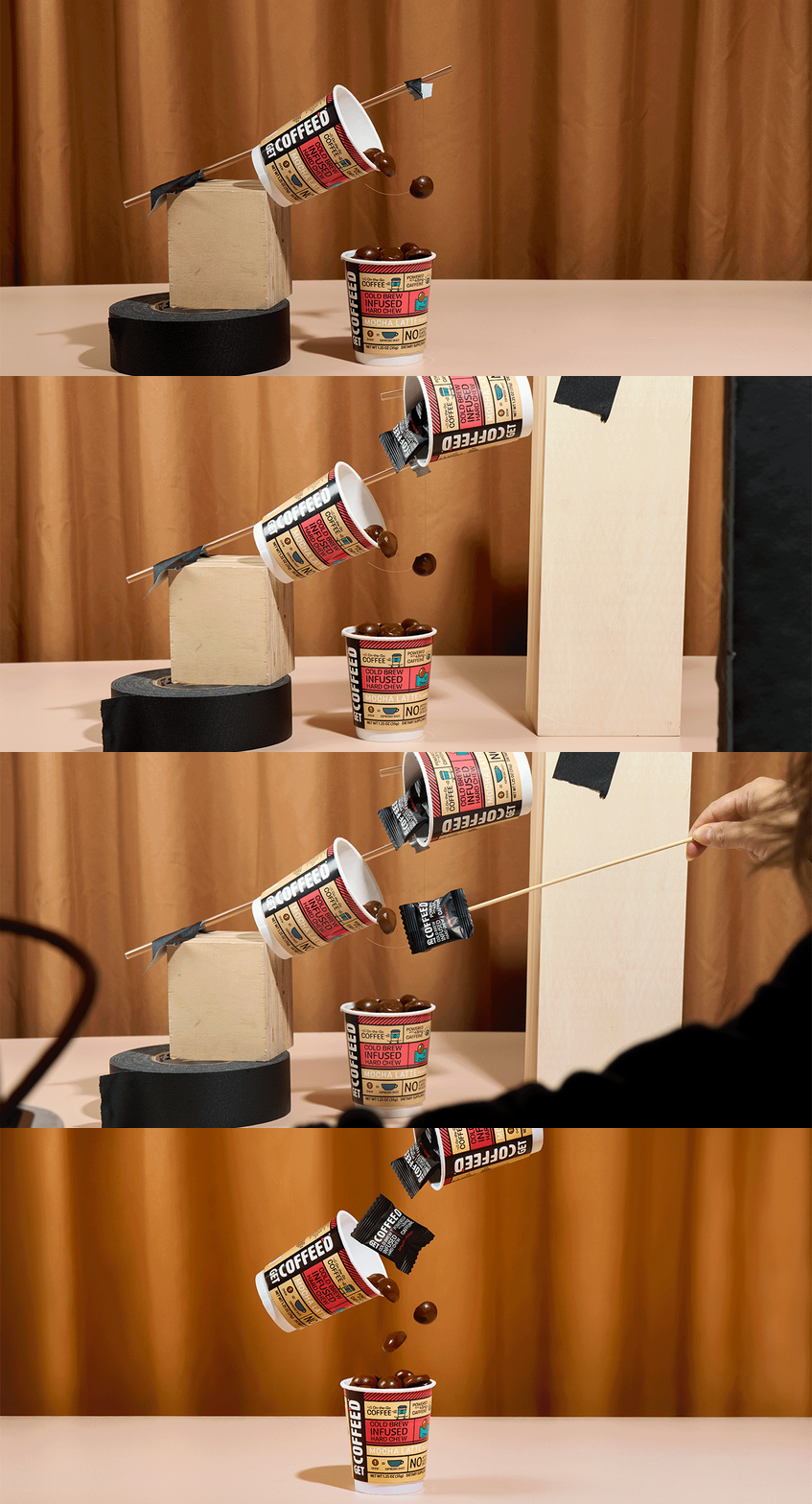
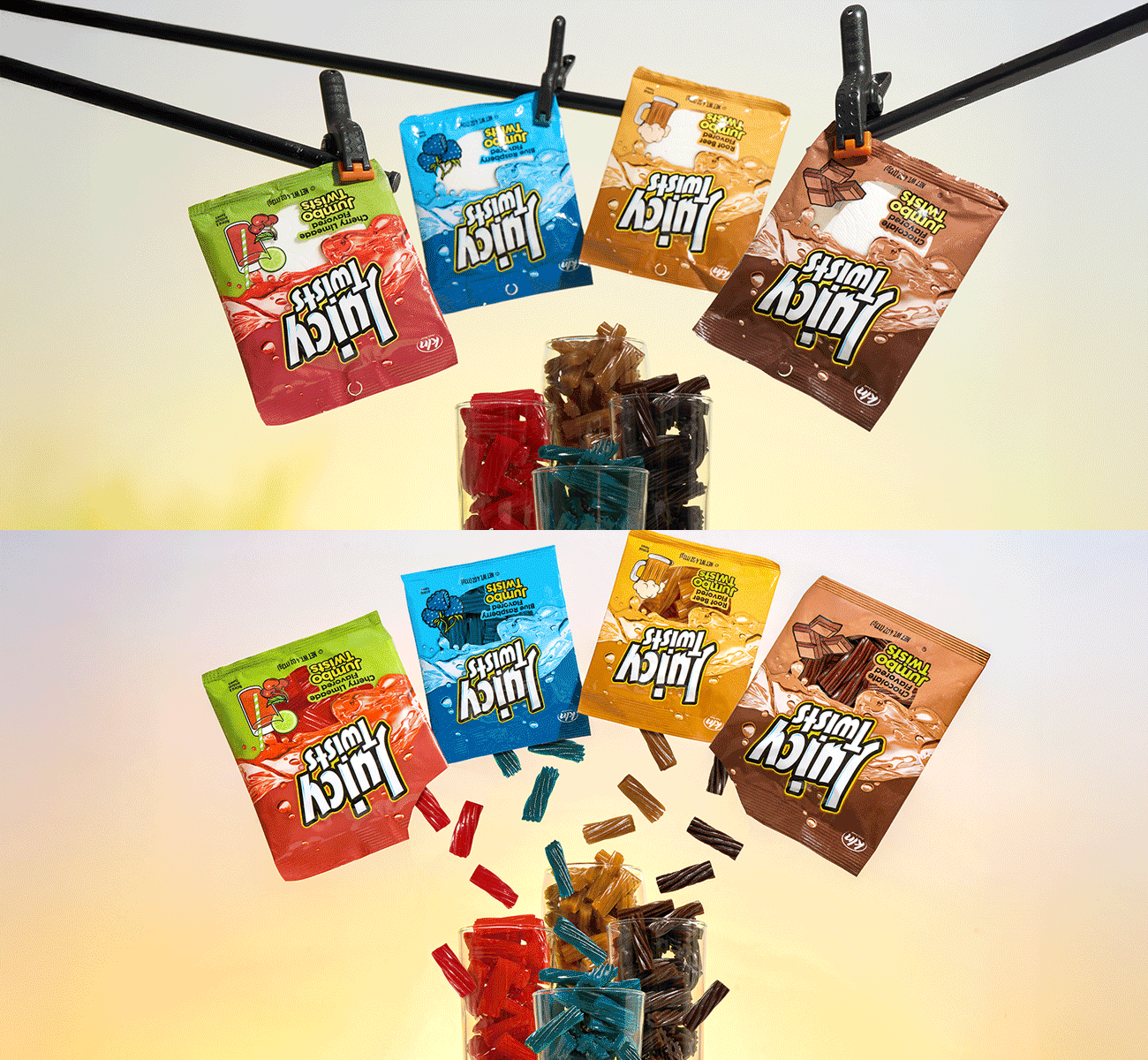
When you try to capture everything in a single frame, you are often at the mercy of physics. Compositing frees you from these limitations. By shooting elements separately, you gain granular control over every pixel of the final image.
You can independently adjust:
Light direction and intensity on the product versus the background
Color harmony to ensure the brand colors pop
Perspective and scale to make products look larger than life
Depth and mood to guide the viewer's eye
This results in images that feel intentionally art-directed rather than just "captured," which is essential for high-converting Amazon lifestyle or hero shots.
Ensuring Brand Consistency Across Product Lines
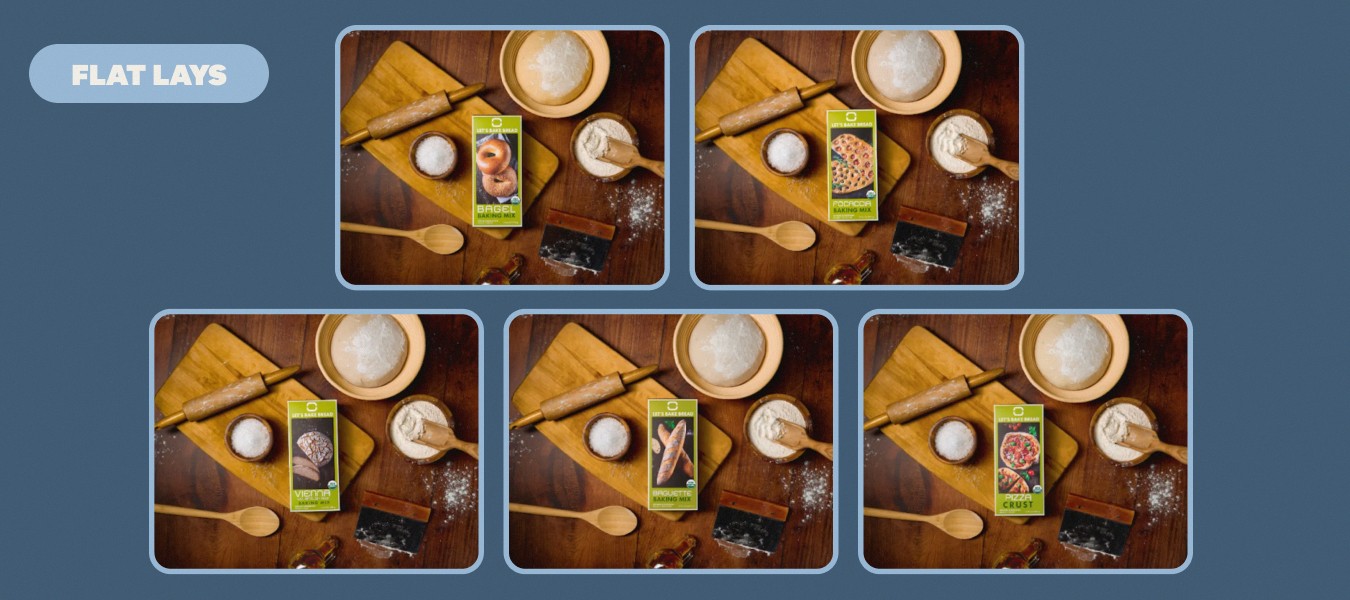
For brands with multiple SKUs, consistency is key. If a client has 10 different flavors of a beverage, shooting them on different days (or even different hours) can lead to slight variations in lighting or shadows that look messy in a catalog.
Compositing solves this by allowing you to:
Use the exact same digital environment for an entire product line
Keep shadows, reflections, and color grading 100% uniform
Swap packaging updates quickly without a reshoot
Maintain identical camera angles across different SKUs
For ecommerce catalogs and Amazon storefronts, this cohesion equals higher conversion rates because the browsing experience feels professional and trustworthy.
Research shows that visual consistency across product lines can improve conversion rates by up to 23%.
Fixing Imperfections Without Reshoots
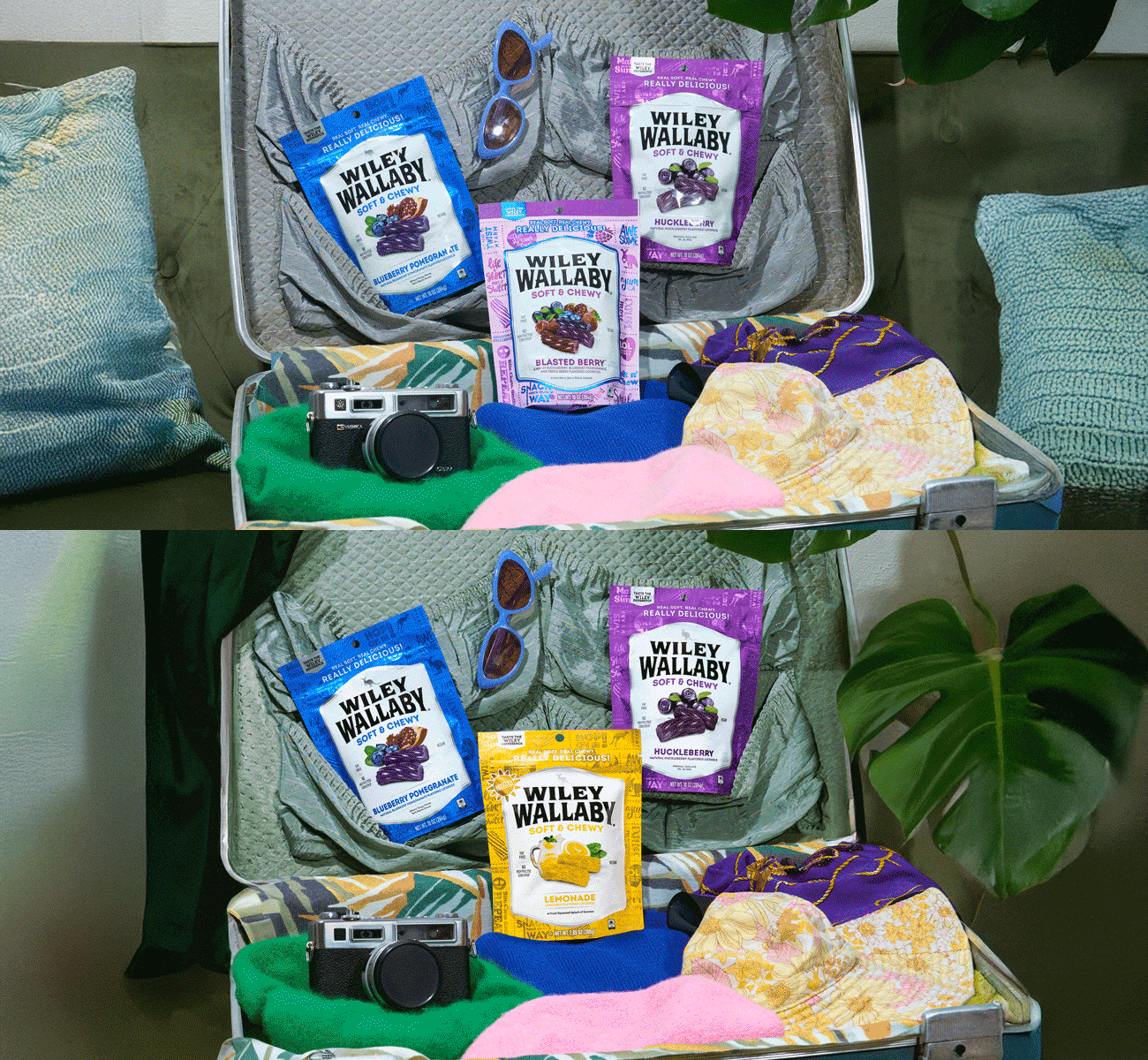
We've all been there: you get the perfect lighting, but the label is crooked. Or the dog looked cute, but the product was out of focus. Instead of scrapping the shoot, compositing lets you "Frankenstein" the perfect shot together.
Instead of reshooting, you can replace:
Wrinkled or damaged packaging
Misaligned labels
Unwanted props or distractions
A pet's expression (e.g., swapping in a better headshot of a dog)
This approach saves time on set, reduces production stress, and guarantees a flawless final deliverable. Industry data suggests that compositing workflows reduce per-SKU production time by approximately 40% compared to traditional reshoot cycles.
Achieving Impossible Sharpness (Focus Stacking)
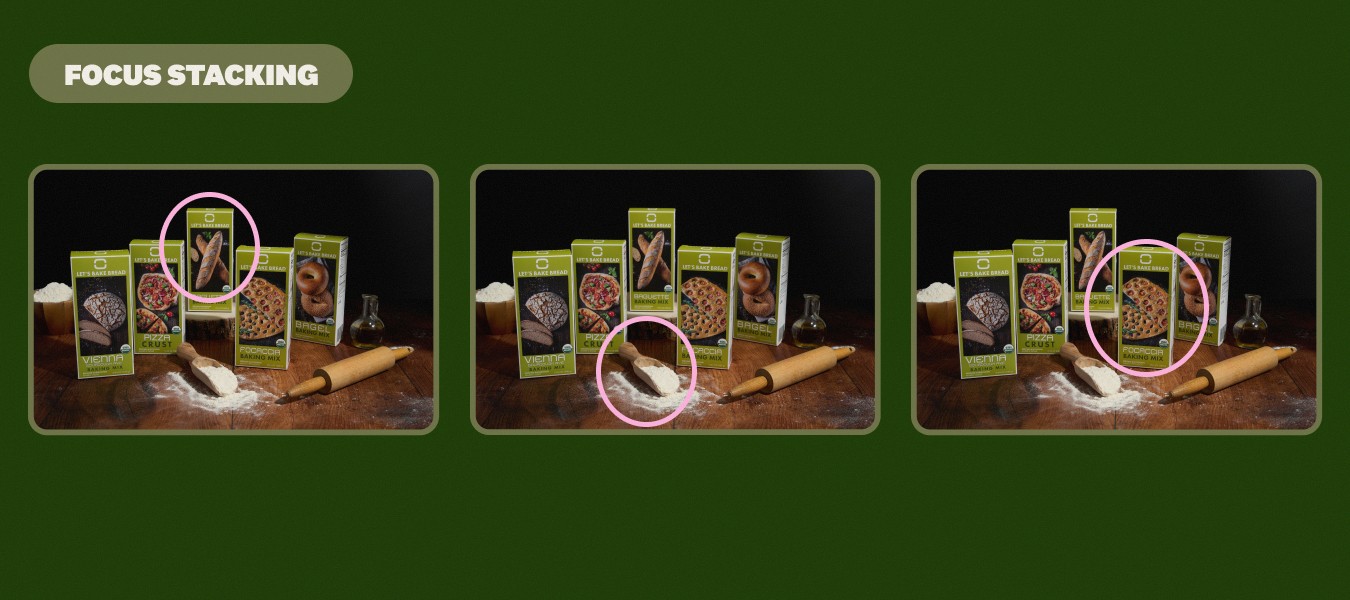
When shooting small products (jewelry, cosmetics, or food), you are constantly fighting depth of field. Physics dictates that the closer you get to a subject, the blurrier the background (and foreground) becomes. If the logo is sharp, the bottle cap is often soft.
Compositing allows you to defy these physics through focus stacking:
Shoot slices: Capture the product in a series of images, moving the focus point from front to back.
Merge in post: Combine the sharpest parts of every layer into one composite.
Retain quality: Avoid the diffraction and loss of sharpness that comes from stopping your lens down to f/22.
This results in a "hyper-real" image where every millimeter of the product—from the front label to the back ingredients list—is tack-sharp. For customers buying online, this clarity signals premium quality.
Building Lifestyle Narratives in Post
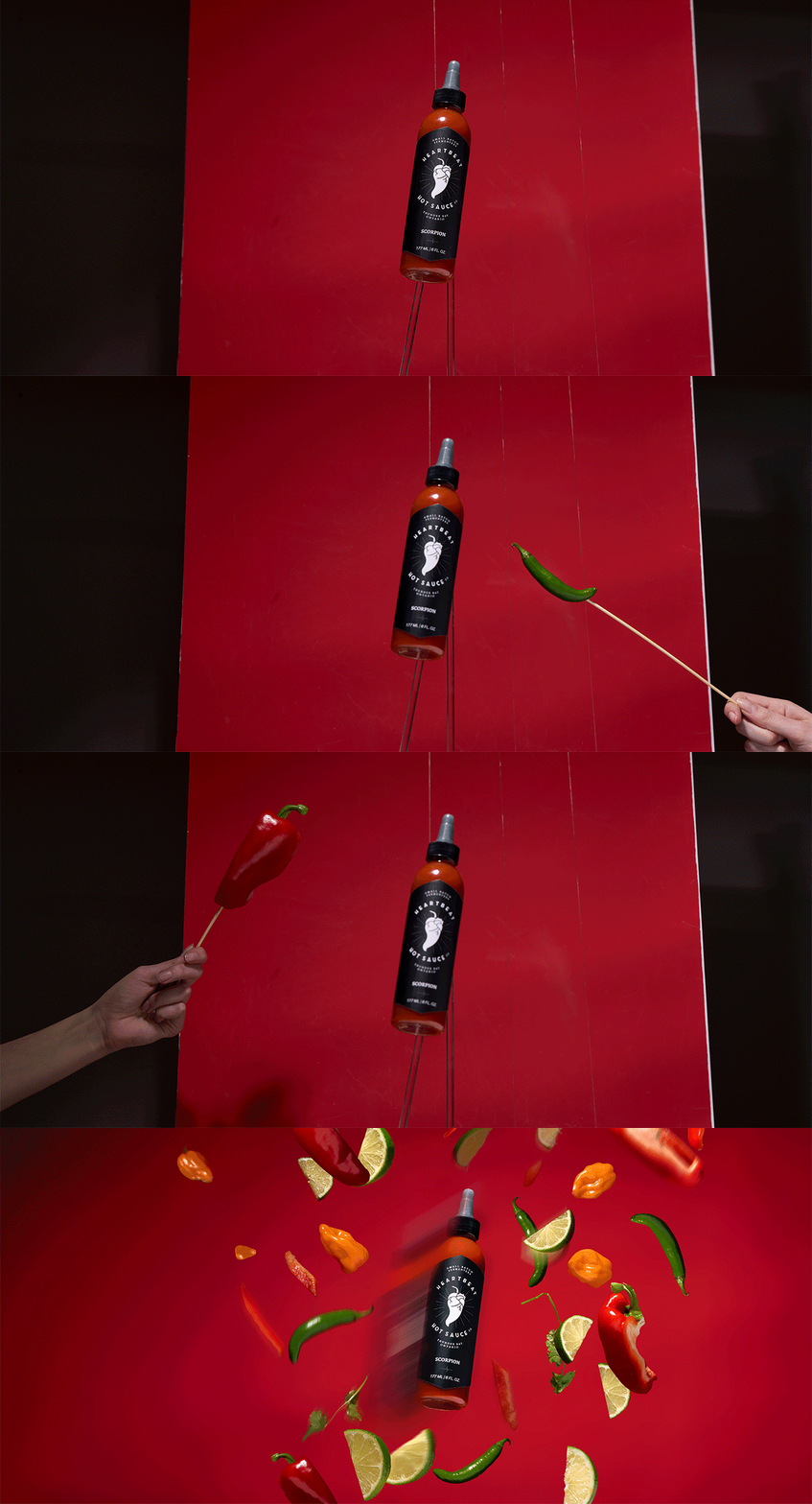
Great marketing photography tells a story. Compositing gives you the tools to craft lifestyle narratives that connect emotionally with customers, even if those moments didn't happen spontaneously.
Examples of storytelling through composites:
A dog looking happily up at its owner while a treat bag sits naturally in the foreground
A "luxury bath" shampoo scene where the steam, water droplets, and lighting feel spa-like and serene
A dynamic coffee candy shot where beans, caramel, and liquid drips swirl around the product to visually communicate flavor
Stories sell. Compositing ensures you can craft the exact story the brand needs.
Elevating Perceived Brand Value
There is a reason high-end brands like Apple or Nike rely on composite imagery: it looks expensive. Polished, clean, and hyper-real images make products look premium, refined, and memorable.
Strong compositing can make even a simple product feel "heroic." On platforms like Amazon, where your image is side-by-side with competitors, this visual differentiation is a massive competitive advantage.
Scaling Creative Assets from Single Shoots
Perhaps the most practical benefit for modern marketing is scalability. Once you have your core assets (the product shots), the possibilities are endless. Here is how to turn one shoot into a month's worth of content.
1. Generate seasonal versions
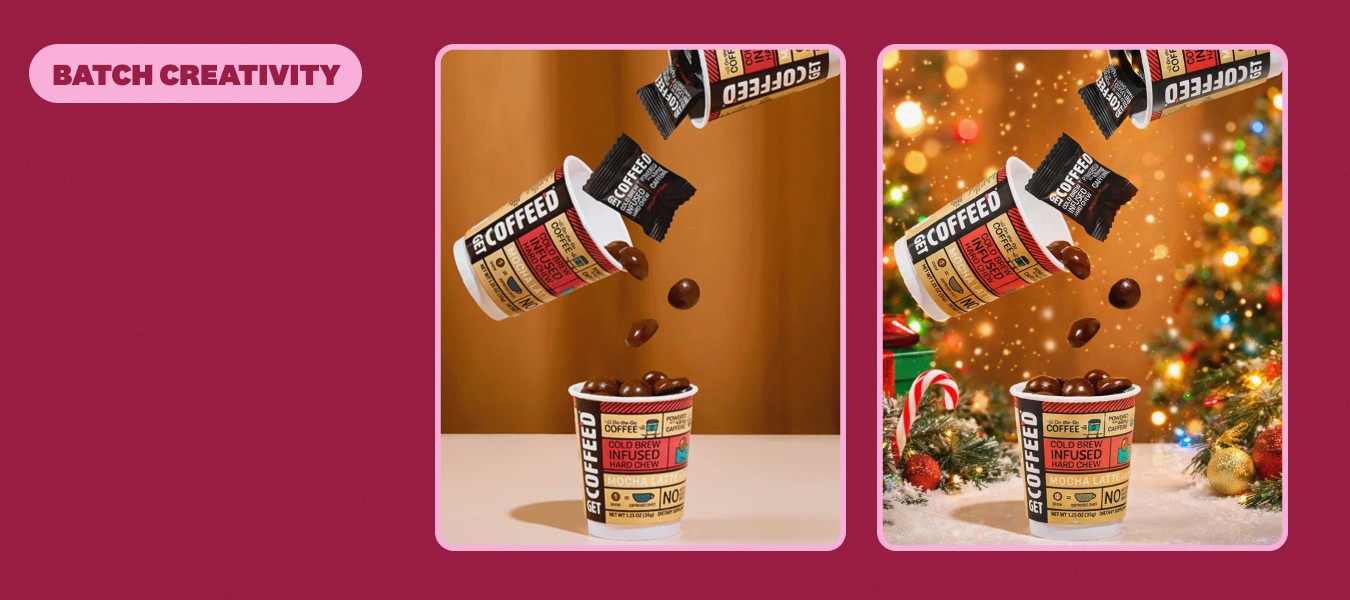
Need a Q4 ad? Add snow, holiday lights, or warm tones to your existing "evergreen" composite. Need a fall vibe? Add leaves.
2. Produce multiple colorways
If the product comes in Blue, Red, and Green, you don't need to shoot all three. Shoot one, and composite/recolor the others for a perfect match.
3. Tailor graphics to campaigns
Resize and rearrange your composite elements for carousels, banners, or short-form video content without losing resolution or quality.
What Brands Get Wrong About Compositing

Despite its advantages, many brands resist compositing because they assume it's either cutting corners or too expensive. Both assumptions are wrong.
"Compositing looks fake"
Not when it's done well. The brands you admire most—Apple, Nike, luxury beauty lines—all use compositing extensively. The difference between amateur and professional compositing is expertise, not the technique itself.
"It's more expensive than traditional shoots"
Initially, compositing may add post-production time. But when you factor in the cost of reshoots, the ability to reuse assets across seasons and campaigns, and the elimination of inconsistency across SKUs, compositing becomes significantly more cost-effective at scale.
"We prefer 'authentic' photography"
Authenticity is about the story you tell, not whether every pixel was captured simultaneously. Compositing allows you to build authentic narratives with more control, not less. The dog doesn't have to sit perfectly still while the product is also perfectly lit: you can capture both moments at their best and combine them.
The brands avoiding compositing aren't protecting authenticity. They're protecting an outdated production model that breaks down when you need to shoot 20+ SKUs with seasonal variants, packaging updates, and cross-channel creative needs.