
Amazon Vendor Central Termination: The Complete 1P to 2P Transition Guide
Vendor Central was once the gold standard. For many CPG brands, it's become a margin trap. Whether you're facing Amazon vendor central termination or choosing to leave, here's how to transition from 1P vs 3P vs 2P — and why the 2P model wins for CPG.
Why Brands Are Leaving Vendor Central
If you're reading this, you probably already feel the pain. But it helps to name it clearly, because the decision to leave Vendor Central is a big one — and you should feel confident it's the right move.
Margin Erosion
↓
Amazon negotiates aggressively on cost. Year after year, they push for lower wholesale prices, promotional funding (CRAP-outs), and accrual-based deductions. For many CPG brands, Vendor Central margins have compressed to the point where the channel is barely profitable — or isn't.
Loss of Control
↓
On Vendor Central, Amazon controls your pricing, your content (to a degree), your inventory levels, and your promotional calendar. When Amazon decides to drop the retail price of your product below MAP, you can't stop them. When they run out of stock because their demand forecasting was wrong, your sales go to zero.
Unpredictable Purchase Orders
↓
Amazon's PO cadence is notoriously unpredictable. Some weeks they over-order, leading to price drops. Other weeks they under-order or skip entirely, creating stockouts. For CPG brands managing production schedules and perishable inventory, this unpredictability is operationally painful.
Chargebacks and Deductions
↓
Routing guide violations, shortage claims, prep requirements, labeling errors — Vendor Central chargebacks are a constant drain. Some brands report losing 3–8% of their revenue to chargebacks and deductions that are difficult to dispute.
The "CRaP" Problem
↓
"Can't Realize a Profit" — Amazon's internal designation for products where their margins are too thin. If your product gets CRaP'd out, Amazon stops ordering it. For CPG brands with lower-ASP products, this is an existential risk on Vendor Central.
"We were doing $8M on Vendor Central and losing money on 40% of our catalog after chargebacks and deductions. The 2P transition changed everything." — CPG brand executive
Your Options: 1P vs 3P vs 2P (or Hybrid)
Whether you're proactively leaving or dealing with an Amazon vendor central termination, the question becomes: what's next? The classic 1P vs 3P Amazon debate now has a third option — 2P — and for CPG brands, it changes the calculus entirely.
Go 3P Yourself
Set up a Seller Central account and manage everything internally: listings, advertising, fulfillment, customer service, pricing.
Pros: Maximum control, highest margin potential.
Cons: Requires building an internal team (3–8 people), significant operational complexity, steep learning curve.
Partner with a 2P Accelerator
A 2P partner buys your inventory and handles everything. You get the simplicity of 1P with the economics and control of 3P.
Pros: Low operational burden, aligned incentives, professional execution.
Cons: Wholesale pricing (lower per-unit revenue), partner dependency.
Hybrid Approach
Keep some products on Vendor Central while moving others to 2P or 3P. Sometimes used as a transition strategy.
Pros: Lower risk, gradual transition.
Cons: Operational complexity, channel conflict, doesn't solve the core problems.
Why 2P Is the Preferred Path for CPG Brands
For most CPG brands, going full 3P isn't realistic. You'd need to hire Amazon specialists, set up advertising operations, manage FBA logistics, handle customer service, and build content capabilities. That's a significant investment in headcount and infrastructure for a channel that isn't your core competency.
The 2P model gives you the best of both worlds:
1
Same simplicity as 1P
someone else handles everything
2
Better economics
negotiate wholesale pricing without Amazon's aggressive squeeze
3
No chargebacks
the 2P partner manages compliance
4
Predictable POs
you agree on volumes upfront
5
Pricing control
contractual guardrails prevent race-to-the-bottom pricing
6
Multi-channel
good 2P partners also handle TikTok Shop and D2C
For a detailed comparison, see 2P Retail Operator vs Amazon Agency.
The Transition Timeline
A typical 1P to 2P transition takes 8–16 weeks from decision to full operation. Here's what to expect:
Weeks 1–2:
Discovery & Audit
Evaluate current 1P performance, identify pain points, select 2P partner
Weeks 3–4:
Agreement & Planning
Finalize terms, plan SKU migration, establish brand guidelines
Weeks 5–10: Migration & Ramp
2P partner creates listings, inventory ships, advertising launches, 1P winds down
Weeks 11–16:
Optimization
Buy Box stabilization, advertising optimization, performance baseline established
Step-by-Step Transition Process
01
Audit Your Vendor Central Performance
Before making any changes, understand where you stand:
Calculate your true margin after all deductions, chargebacks, and promotional funding
Identify which SKUs are profitable and which are CRaP-risk
Document Amazon's PO patterns over the last 12 months
Calculate total chargeback/deduction costs
Note any contractual obligations or notice periods with Amazon
02
Select Your 2P Partner
Not all accelerators are the same. Key evaluation criteria:
Category expertise — Do they specialize in CPG?
Track record — Ask for case studies with brands similar to yours
Channel coverage — Do they offer Amazon + TikTok Shop + D2C?
Creative capabilities — Will they produce A+, video, and social content?
Transition experience — Have they migrated brands from 1P before?
03
Plan the Migration
The most critical part of the transition is maintaining sales velocity during the switch. The wrong approach is to shut down 1P and then figure out 2P.
2P partner sets up seller account and creates optimized listings
Initial inventory ships to FBA (or partner fulfillment centers)
2P listings go live while 1P is still active (parallel operation)
As Amazon's 1P inventory depletes, the Buy Box transitions to the 2P listing
1P is fully wound down once 2P has stabilized
04
Execute the Migration
During the parallel period.
Monitor Buy Box ownership daily — the transition from Amazon retail to 2P seller should be gradual
Launch advertising immediately on 2P listings to build relevance
Preserve review history by matching ASINs (not creating new listings)
Maintain pricing discipline — don't undercut Amazon's remaining 1P inventory
05
Optimize Post-Transition
The first 60 days after full transition are critical.
Buy Box should stabilize at 90%+ within 30 days
Advertising ROAS benchmarks should be established by day 45
In-stock rate should reach 95%+ immediately
Weekly performance reviews with your 2P partner
Common Pitfalls to Avoid
Shutting Down 1P Before 2P Is Ready
This is the #1 mistake. If you stop Vendor Central POs before your 2P partner has inventory and listings live, you'll have a gap with zero sales. Always run in parallel.
Creating New ASINs Instead of Matching Existing Ones
Your 1P listings have review history, search ranking, and sales velocity. Your 2P partner should be selling on the same ASINs, not creating duplicates.
Ignoring the Buy Box Transition Period
When both Amazon (1P) and your 2P partner are selling the same ASIN, Buy Box ownership rotates. This is normal and temporary. Don't panic — it stabilizes as Amazon's inventory depletes.
Not Communicating with Retail Buyers
If you're leaving Vendor Central voluntarily, communicate professionally with your Amazon buyer. Burning bridges can create complications (like Amazon continuing to order and competing on the listing).
Choosing a Partner Without CPG Experience
Consumable products have unique dynamics: expiration dates, Subscribe & Save, pantry/grocery placement, unit economics on low-ASP items. Make sure your 2P partner understands these. Compare CPG-focused vs generalist accelerators →
What a Successful Transition Looks Like
Whether you're proactively leaving or dealing with an Amazon vendor central termination, the question becomes: what's next? The classic 1P vs 3P Amazon debate now has a third option — 2P — and for CPG brands, it changes the calculus entirely.
The Results Brands See After Transitioning
Based on Neato's portfolio of 1P-to-2P transitions:
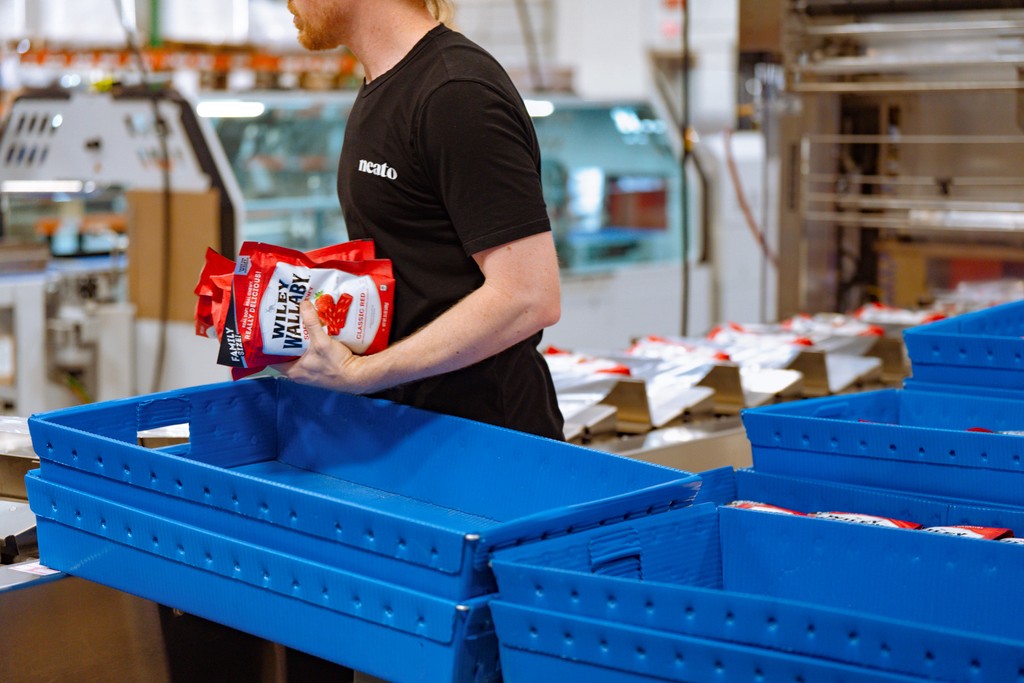
Brands like Wiley Wallaby (+168% YoY), Earth Animal (+204%), Dot's Pretzels (+121%), and illy Coffee (+137%) have all grown significantly after transitioning from 1P to Neato's 2P model.