

A founder I respect walked into my office last quarter and told me Amazon was “just one of our channels.”
He runs an eight-figure CPG brand. His Amazon business is bigger than his DTC and his retail combined. He genuinely believed what he said.
This is the most expensive blind spot in modern consumer goods.
For most brands today, Amazon is not a distribution channel. It is the price floor for every retail buyer who looks you up. It is the highest-fidelity demand signal in your category. It is the financial scoreboard your investors actually trust. It is the customer acquisition engine quietly bankrolling — or quietly bankrupting — the rest of the business. Calling that a “channel” is like calling a heart a “muscle.” Technically true. Strategically catastrophic.
I have spent the last several years inside the operating decks of more CPG brands than I can count. The pattern is now too consistent to ignore. The brands that win on Amazon are not the ones with better products, better content, or better luck. They are the ones who figured out, before their competitors did, that Amazon’s gravity bends the entire business — and then stopped pretending otherwise.
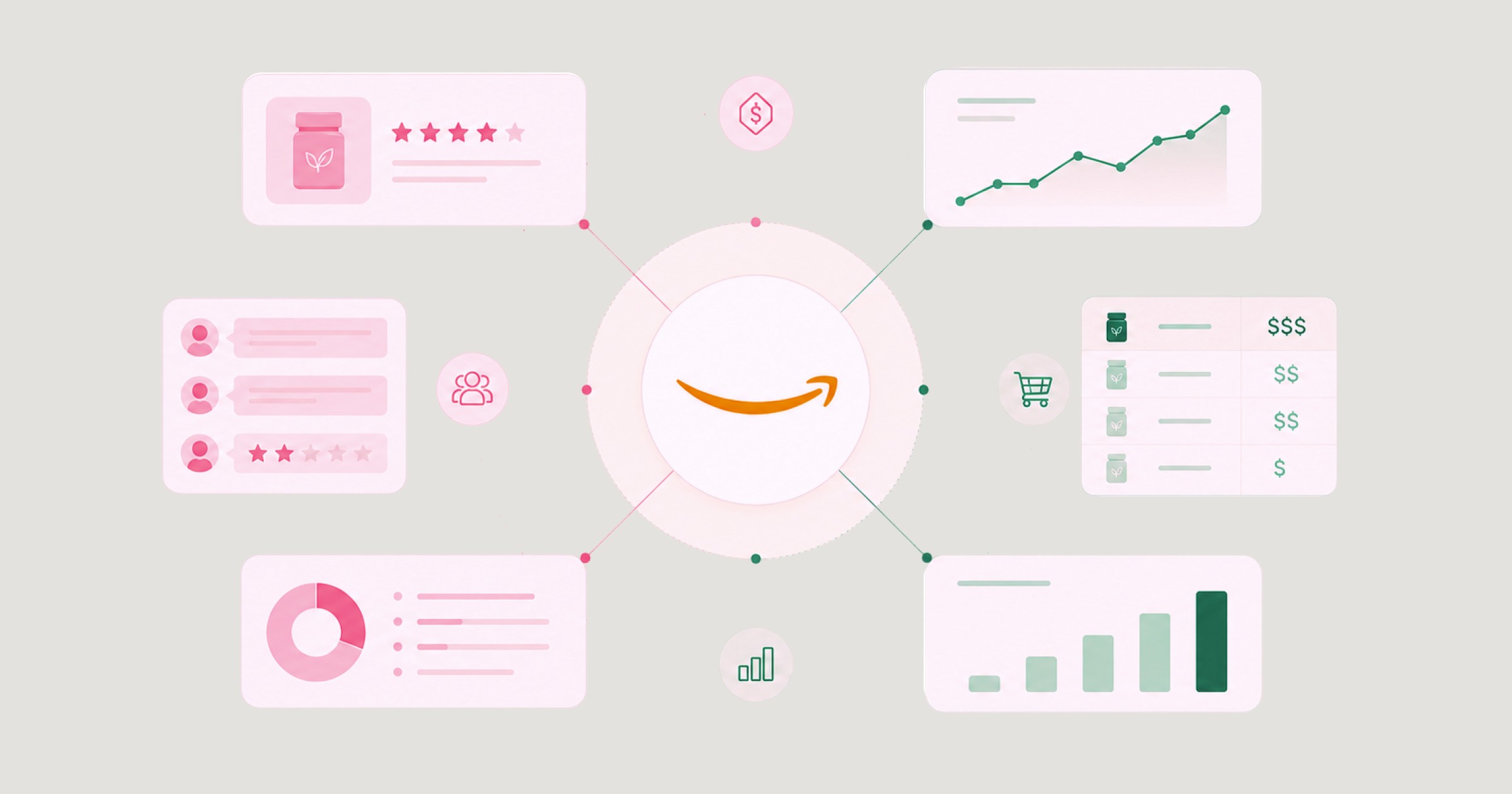
The price you set on Amazon is the price you set everywhere
Your retail buyer at Target pulls up your Amazon listing before the meeting. So does your distributor. So does your investor. So does your DTC customer who is now wondering why your website charges fifteen percent more for the exact same SKU.
If your hero product has been at a "promotional" price on Amazon for ninety days, it isn't a promotion anymore. It is the price. And every margin assumption in your wholesale agreements, your DTC funnel, and your operating plan just got rewritten — usually without anyone in the room noticing until the quarter ends.
Most brands handle Amazon pricing the way you'd handle a parking ticket. Somebody on the team manages it. Leadership doesn't really get involved. The consequences feel small until they aren't. Pricing belongs at the executive table, and on Amazon, pricing happens every minute of every day. Whoever is making those calls is making strategic decisions about your brand. That had better be someone you trust.
Your real customer panel is a free Amazon API call away
Brand teams will tell you what’s working based on Expo West sample tables, Instagram comments, and gut. Amazon will tell you what is actually working — what’s converting, at what price, against which competitors, with what objections — minute by minute. Most brand teams do not look. The brands I’ve watched compound on Amazon read it like a daily newspaper.
The 1-star reviews on your hero SKU are the cheapest customer-research panel in the industry. The “Customers who viewed this also viewed” carousel is the highest-fidelity competitive map you’ll ever get without paying a consultant. The conversion-rate change after a hero-image swap is a million-dollar A/B test that Amazon runs on your behalf whether you participate or not.
If your brand strategy isn’t ingesting Amazon as a primary input — not as a footnote in the monthly deck — you are flying with one eye closed and an outdated map.
Your capital decisions are already getting made on Amazon (whether you know it or not)
Inventory levels. Working capital. Ad budget. The next NPD slot. Every one of these gets implicitly decided by what’s happening on Amazon, even at brands that swear it’s “just a channel.”
The SKU that sells through fastest gets reordered first. The category with the strongest Amazon trend gets the next product launch. The retail buyer who sees your ranking decides whether to take the meeting. The fund manager who pulls third-party Amazon data forms an opinion before you sit down.
This isn’t a problem. It’s the structure of modern consumer goods. The brands that thrive don’t fight it. They make these decisions deliberately, with a strategy, instead of accidentally, by spreadsheet.
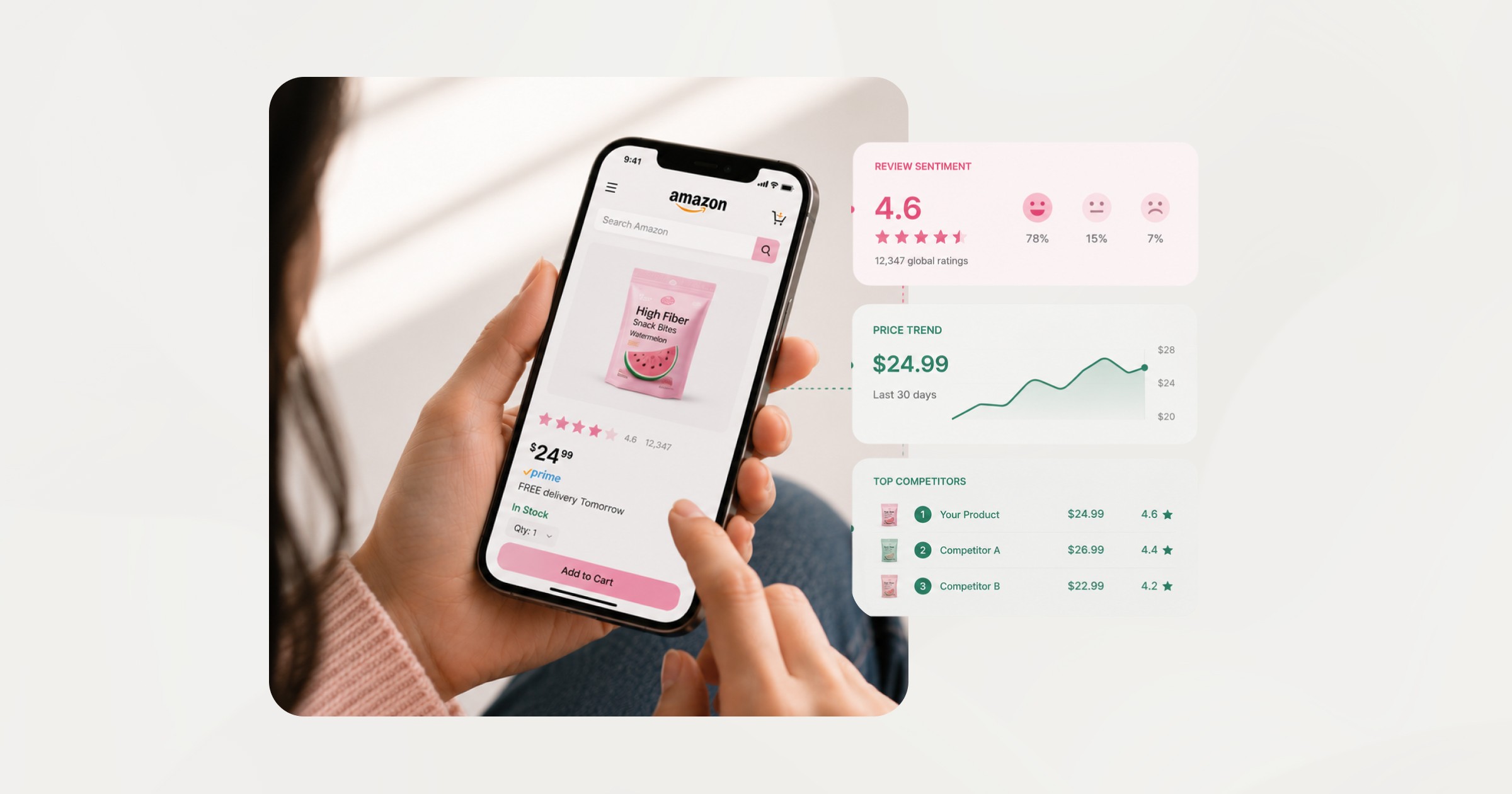
The “channel” framing is doing real damage
When Amazon is “a channel,” it gets a channel-level org chart. An Amazon manager. Maybe an agency. A monthly performance review nobody on the executive team really attends. Pricing strategy, inventory policy, brand presentation, NPD priorities — all decided elsewhere, then handed down for execution.
This is exactly backwards. The Amazon team has the most current data, the most direct customer signal, and the fastest feedback loop in the entire business. Treating them as a downstream execution function is leaving the sharpest sensor you own unwired. Then everyone wonders why the strategy keeps missing the market.
Three changes turn this around immediately:
Amazon performance enters the executive-level P&L view. CEO, CFO, head of marketing — looking at Amazon weekly, with the same seriousness you’d look at total revenue and gross margin.
Amazon promo decisions stop getting made one SKU at a time. Every price move is a brand-level pricing decision. Treat it that way.
Listings get treated as your most important brand asset. They convert more shoppers than your homepage ever will. Staff and resource them accordingly.
None of this is technically hard. All of it is organizationally hard. That’s why most brands won’t do it. Which is exactly why the ones that do are about to run away with the next decade.
The takeaway
You don't have an Amazon strategy and a brand strategy. You have one strategy, and Amazon sits at the center of it. The only question is whether you're running it deliberately, or whether it's running you.
The founders I work with who figure this out spend a couple of uncomfortable months reorganizing how they make decisions. The ones who don't keep blaming "the algorithm" for outcomes they decided themselves.
Pick.


