
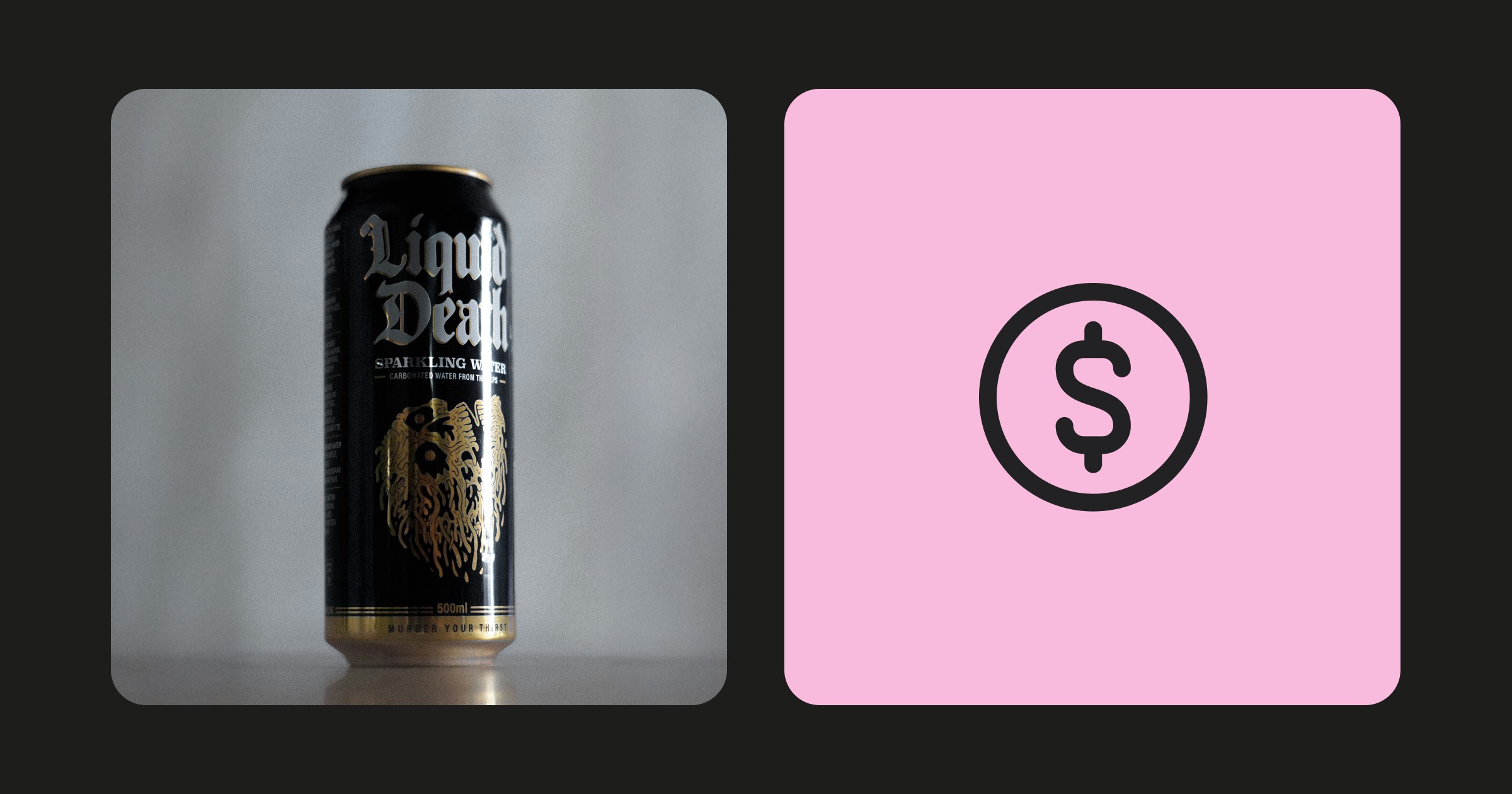
Every CPG founder has been told to study Liquid Death. The pitch deck references, the conference keynotes, the LinkedIn posts treating Mike Cessario's creation like a replicable playbook.
Most of them walk away with exactly the wrong takeaways.
They see the skull logo and think: "Be edgy." The irreverent marketing: "Be funny." The entertainment-first approach: "Content is king."
None of that is wrong, exactly. It's just useless as instruction. Because the transferable lessons from Liquid Death aren't the ones everyone's talking about.
Two things transfer. Exactly two. Everything else was a specific founder, at a specific moment, in a specific cultural window that has already closed. And in my experience running brands through various stages of growth, the founders who try to copy Liquid Death's surface-level moves without understanding the mechanics underneath end up wasting a lot of money looking edgy while their unit economics fall apart.
The $1,500 Test
Before Liquid Death had a product, it had a Facebook ad.
In 2017, Cessario spent $1,500 to produce a rough concept video — a fake commercial for canned water with heavy metal branding — and ran it as paid social. No product. No supply chain. No retail partnerships. A video and a credit card.
The ad went actually viral. Not “marketing team pats itself on the back” viral. Millions of views. A Facebook page that grew past 100,000 followers before a single can of water shipped.
This is the first transferable lesson. It has nothing to do with branding or creative execution.
Validate demand before you build supply.
Cessario didn’t quit his job, raise money, source water, design cans, build a supply chain, and then find out if anyone cared. He spent $1,500 to test whether the concept resonated. When it did — unmistakably — he built behind it.
I respect the hell out of that sequencing. In my experience, the CPG industry is full of brands that did it backward. Perfected the formula, designed the packaging, secured the co-packer, negotiated retail placement — then discovered nobody was looking for their product. They solved a supply problem that had no demand signal.
The $1,500 test isn’t about being scrappy. It’s about getting the order of operations right. Demand signal first. Supply chain second. Capital raise third.
This applies directly to Amazon. Brands come to Neato constantly with products ready to ship, listings ready to publish, and zero evidence of demand. The ones that succeed are almost always the ones who validated interest before committing inventory — pre-launch campaigns, social proof, search volume analysis. The mechanics differ from a Facebook ad test. The principle is identical.
Brand Specificity Compounds
The second transferable lesson is about what Liquid Death actually built — not how they talked about it.
Liquid Death didn't create "premium water." Premium water already existed. Fiji. Voss. Evian. The shelf was packed with brands competing on purity, source location, mineral content, and elegant packaging.
Liquid Death created water for people who think water brands are ridiculous.
That's not positioning. That's identity. The person who buys Liquid Death is making a statement about who they are, not what they drink. The tallboy can isn't a packaging choice — it's a tribal marker. The skull isn't a logo — it's a membership badge.
I've seen this dynamic play out with brands we partner with, and it works the same way every time. When your brand represents something specific enough that people self-identify with it, the economics change fundamentally.
The compounding works like this:
Specific identity attracts specific customers. The punk/metal/counterculture audience that resonated with Liquid Death didn't just buy — they bought in. Repeat purchase rates for identity-driven brands run 2–3x higher than commodity brands. I've seen this in our own portfolio — the brands with the strongest identity consistently have the highest Subscribe & Save retention.
Specific customers create content for you. Liquid Death's customers became its marketing department. User-generated content, organic sharing, actual tattoos of the logo — Liquid Death ran a loyalty program trading Liquid Death tattoo photos for merch. You cannot buy that kind of advocacy. It only happens when the brand is specific enough to become part of someone's identity.
Specific identity enables category extension. Liquid Death moved from water to iced tea to electrolyte mixes. Each worked because the audience trusted the identity, not the ingredient list. A generic premium water brand couldn't launch iced tea without muddying its positioning. Liquid Death could launch anything as long as the identity held.
Specificity compounds commercially. On Amazon, brand-specific search terms like "Liquid Death water" convert at dramatically higher rates and lower CPCs than category terms like "canned water." Off Amazon, retail buyers give shelf space to brands with demonstrated customer loyalty, not the ones with the prettiest pitch deck. In my experience, this is the single biggest driver of long-term TACOS compression — when people search for your name instead of your category, your entire cost structure improves.
The lesson for other brands isn't "be punk." It's "be something." Pick an identity narrow enough that the right customers recognize themselves in it — and the wrong customers opt out. Then let that specificity compound across every channel.
At Neato, the brands in our portfolio that grow fastest on Amazon share this quality. They're not trying to be the best option for everyone searching a category keyword. They're the only option for a specific customer with a specific identity. That shows up in conversion rates, repeat purchases, branded search, and margins.
What Doesn’t Transfer
Now the part nobody wants to hear.
The vast majority of what made Liquid Death successful is not replicable. Pretending otherwise is how brands light money on fire.
Cessario’s background doesn’t transfer. He spent a decade in advertising, including time at Crispin Porter + Bogusky. Deep expertise in viral content, media buying, brand development — all before he ever conceived of Liquid Death. “Just make funny content” ignores ten thousand hours of professional creative experience behind the content. I’ve been in this industry long enough to know that what looks effortless usually isn’t.
The timing doesn’t transfer. Liquid Death launched in 2019 — DTC brands attracting unprecedented VC, social algorithms still rewarding organic reach, consumer appetite for irreverent brands peaking. Those conditions are gone. Organic social reach has collapsed. VC for CPG has contracted sharply. The window Liquid Death climbed through has narrowed considerably. For perspective on where the next windows are opening, see our take on TikTok Shop in 2026.
The capital structure doesn’t transfer. Over $200 million in venture capital across multiple rounds funded a marketing machine — Super Bowl ads, celebrity endorsements (Martha Stewart, Tony Hawk), elaborate stunts. No bootstrapped or modestly funded brand can replicate that playbook. The marketing required the capital, and the capital required the timing and traction from 2019.
The category dynamics don’t transfer. Water is a $300+ billion global market with near-zero product differentiation. The gap between Liquid Death and competitors was pure brand — no functional advantage in the product itself. In categories where product performance matters — supplements, skincare, food — identity alone won’t save a mediocre product. Liquid Death’s approach worked partly because water is water, and brand was the only differentiator available.
The controversy tolerance doesn’t transfer. “Murder Your Thirst.” Selling actual souls on the website. A severed-head Super Bowl ad. This works for a counterculture brand built on provocation. It would destroy a family-oriented pet food company or a wellness supplement. I’ve watched brands try to bolt on edginess that didn’t match their core audience — the results range from cringe to actively harmful.
The Two-Principle Filter
When someone tells you to “learn from Liquid Death,” run it through this:
Does this relate to concept validation or brand specificity? If yes, study it, adapt it, apply it.
Does this relate to creative execution, timing, founder background, capital access, or category dynamics? If yes, it’s descriptive — not prescriptive. Interesting to study. Dangerous to copy.
The founders who build the next iconic CPG brands won’t do it by imitating Liquid Death’s aesthetic. They’ll do it by testing demand before building supply, and by being specific enough that their customers become their marketing engine.
Everything else is a case study, not a playbook.
The Graveyard of Imitators
Between 2020 and 2024, dozens of CPG brands launched with provocative branding, irreverent marketing, counterculture positioning. Most are gone. The survivors pivoted away from imitation toward their own specificity.
The failure pattern was depressingly consistent: launch with edgy packaging and irreverent copy, generate buzz from novelty, stall when the novelty fades. Without genuine specificity — without being for someone specific in a way that creates identity and loyalty — the provocative packaging was just packaging. Not an identity. Not a community. A gimmick with a shelf life measured in months.
Liquid Death’s irreverence works because it’s native to the brand and the founder. Bolted-on edginess — provocative for the sake of provocation — is transparent to consumers and exhausting to maintain. I’ve had conversations with founders of some of these brands after the fact. The common thread was always the same: they copied the tone without building the substance underneath. And substance is what compounds.
Where This Meets Amazon
The Liquid Death principles play out on Amazon every day, even for brands that look nothing like Liquid Death.
Concept validation on Amazon means studying search volume, running small-batch test listings, measuring conversion before committing to big inventory positions. Brands that launch with demand signals — social proof, pre-launch audiences, existing retail traction — outperform list-and-pray approaches by 3–5x in their first 90 days. I’ve seen this pattern hold across dozens of launches in our portfolio.
Brand specificity on Amazon means building listings, A+ Content, and advertising strategies around who your customer is, not just what your product does. It means branded search growing quarter over quarter. It means reviews that say “this is MY brand” — not “good product, fair price.”
The brands in Neato’s portfolio that exemplify this — illy with its Italian coffee heritage, Earth Animal with its holistic pet philosophy, Criss Angel MINDFREAK with its entertainment identity — all have the specificity that compounds. They’re not for everyone. They’re unmistakably for someone.
That’s the real lesson from a can of water with a skull on it.
Anthony Connelly is CEO at Neato, where he leads the company’s vision as a 2P eCommerce acceleration partner for consumer brands. Neato is a 2P eCommerce acceleration partner — we buy inventory, become seller of record, and grow brands on Amazon with certainty.


