

I've spent the better part of this year inside CPG P&Ls. Different brands, different categories, different price points. The same pattern keeps showing up.
Margin compression is structural, ongoing, and accelerating. It is not a temporary input-cost problem from inflation. It is not a one-quarter retail-media cost spike. It is a long-running compression that's hit gross margin, contribution margin, and operating margin simultaneously across most of the consumer goods industry — and the brands that recognize it as structural are responding very differently from the brands still treating it as a passing issue.
This piece is about what the smart brands are actually doing about it. Not what the McKinsey deck says. What I see leadership teams doing inside the operating reviews when nobody's pretending.
What's actually causing the squeeze
Five compounding pressures, all real, none temporary:
Input costs are higher than five years ago and haven't normalized. Commodity inputs, packaging, freight — all sit elevated relative to pre-2020 baselines. Some have come down from peak. None have returned to where they were. The new floor is meaningfully higher than the old ceiling.
Retail media is now a permanent operating expense. Brands that used to spend 3-4% of revenue on retail media now spend 8-15%. The spend isn't optional — it's structural for visibility on the largest sales channels. This compression hits below the gross margin line and most P&L summaries don't surface it cleanly.
Trade promotion costs continue rising. Slotting fees, end-cap charges, scan-back funding, retailer co-op — the cost of physical retail distribution has gone up faster than inflation. For brands with meaningful retail volume, this is a real squeeze that hits at the wholesale margin level.
Return rates have risen across categories. Pandemic-era purchasing behaviors created return-rate norms that are higher than pre-2020 baselines and don't appear to be reverting. Returns hit margin directly through processing costs, lost product, and inventory write-downs.
Premium price elasticity has shifted. In categories where consumers used to absorb 5-8% annual price increases without resistance, current consumer behavior shows more elasticity — basket changes, downsizing, channel switching. The pricing lever brands used to rely on is meaningfully weaker than it was three years ago.
Add it all up and you have an industry where compounding pressure on the cost side is meeting weakened pricing power on the revenue side. The squeeze isn't ending. The brands that win the next five years are the ones planning for it explicitly.
What the smart brands are doing — and not doing
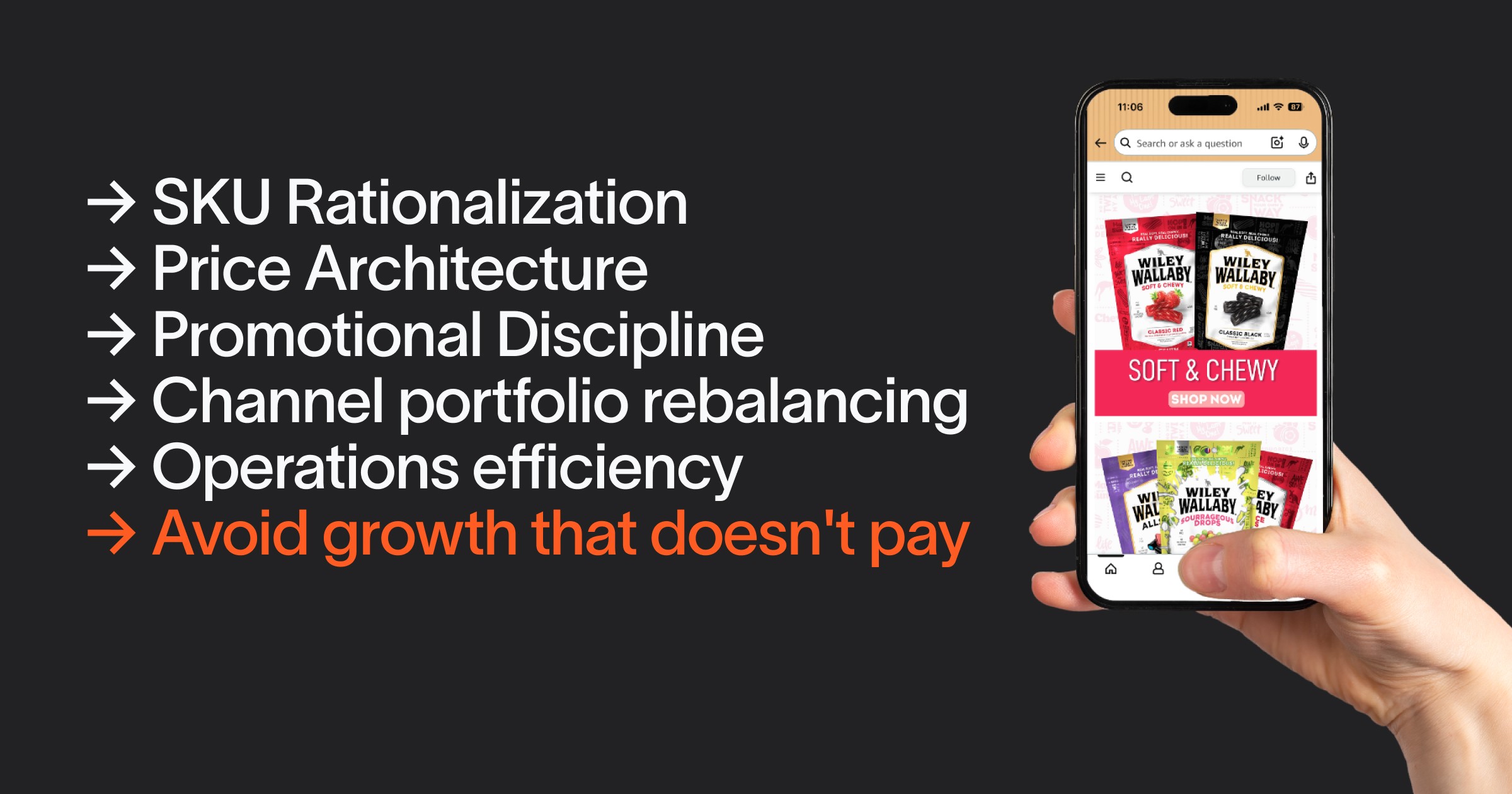
The pattern of effective responses is remarkably consistent. Six things show up.
1. SKU rationalization, executed seriously
Most brands have catalogs that grew through the era of low-friction expansion and never got pruned when conditions changed. The bottom 20% of SKUs by contribution profit consume disproportionate operational attention, FBA storage capacity, ad budget allocation, and supply chain complexity for almost no incremental revenue.
The smart brands have killed 15-30% of their catalogs in the last 18 months. Not the worst-revenue SKUs — the worst contribution-profit SKUs. The capital and attention freed up redeploys to the top 20% of the catalog, which then grows more efficiently.
The brands not doing this are subsidizing their bottom-quartile SKUs out of margin from their top-quartile SKUs and producing weaker results across the entire catalog as a result.
2. Price architecture, not blanket increases
When brands try to recover margin by raising prices across the board, two things happen. Volume drops more than expected because consumer elasticity is higher than the model predicted. The brand's relative position in the category shifts as competitors hold prices steady and capture share.
The smart brands aren't raising blanket prices. They're rebuilding price architecture: tiered SKUs at different price points, clearer good-better-best positioning, premium variants that justify price increases through tangible differentiation. The customer isn't paying more for the same thing. The customer is choosing among options where higher prices come with higher value.
This is product work and merchandising work, not pricing work. The brands that recover margin durably are the ones doing the product work.
3. Promotional discipline, ruthlessly enforced
Most brands' promotional cadence has drifted toward "always on." A 15% promo this week. A 20% Subscribe & Save discount running permanently. A coupon stacked on a deal stacked on a Lightning Deal. The customer has been trained to wait. The reference price has been reset downward. Margin has compressed structurally.
The smart brands are dismantling the promotional dependence. Fewer promotions. Bigger ones when they happen. Clear off-period pricing that doesn't drift. Subscription discounts that align with actual lifetime value math, not "industry standard."
This is uncomfortable for sales teams accustomed to making the quarter through promotion. It is necessary for the brand to survive the squeeze.
4. Channel portfolio rebalancing
Some channels make money. Some don't. In an environment where margin is precious, the smart brands are getting honest about which channels are actually profitable contribution sources and which are subsidized vanity volume.
This frequently means walking away from channels that generated revenue but never produced contribution profit. Specific 1P relationships where chargebacks consumed all the margin. DTC channels where customer acquisition cost exceeded contribution per customer. TikTok Shop volume that produced first-purchase revenue but no repeat economics. The smart brands are pruning the portfolio to the channels that actually pay for themselves.
5. Operations efficiency at the line-item level
The unsexy work. The brands that win in margin-compression environments turn operations efficiency into a continuous discipline rather than a periodic project. Renegotiating freight contracts annually. Auditing 3PL invoices monthly. Rebuilding fulfillment economics whenever fee schedules change. Pulling out 20-50 basis points across 10 different line items adds up to a meaningful margin recovery in aggregate, even when no single line item moves the needle on its own.
This work doesn't show up in industry presentations. It shows up in the P&L of the brands quietly out-performing.
6. Saying no to growth that doesn't pay
The hardest discipline. Walking away from sales that produce revenue without contribution. New retail accounts that come with slotting fees that wipe out two years of margin. Promotional partnerships that produce volume but commit the brand to pricing that won't pay back. International expansion before the operational infrastructure justifies it.
The brands that compound through margin-compression environments are willing to grow more slowly when growth costs more than it produces. That sounds obvious. It is also remarkably rare in practice. Most operating teams are still rewarded for revenue growth as the primary metric, even when the revenue growth is destroying value.
What to do this quarter
Three actions if your team has been on autopilot:
Run the SKU contribution audit. Top 50 SKUs by revenue, with contribution profit per unit, post-everything. Kill the bottom 15-20% by contribution profit in the next 90 days. Free the capital and attention for the top of the catalog.
Review your promotional cadence honestly. What's the percentage of revenue selling on promotion versus off-promotion? If it's above 50%, you don't have a pricing strategy — you have a discount addiction. Build a 90-day plan to wean off it.
Audit one channel that's underperforming. Pick the channel where your team most resists looking at the numbers. Run honest contribution-profit math on it. Decide whether to fix it or kill it. Don't let it limp.
The takeaway
The margin squeeze is real, structural, and not ending soon. The brands that respond by hoping it gets better will spend the next two years getting weaker. The brands that respond by doing the unsexy work — SKU rationalization, price architecture, promotional discipline, channel honesty, operations efficiency, the willingness to grow more slowly — will emerge from this period stronger than they entered it.
The good news is that the playbook is knowable. The hard news is that knowing it is the easy part. Executing on it requires saying no to a lot of things that revenue-focused org charts naturally say yes to.
Pick the discipline. Or pick the squeeze. Doing nothing is choosing the second one.


