
What Actually Changed in Amazon's Search Stack
For the last several years, Amazon search optimization has rested on a well-understood model: A10 ranks listings by matching keyword tokens in your content to keyword tokens in a query, then weighting by sales velocity, conversion rate, and ad bids. You could diagram the whole system on a whiteboard. Keywords in, ranked listings out.
That model is still running. But there's now a second system layered on top of it — and the data shows it's already reshaping how shoppers discover products.
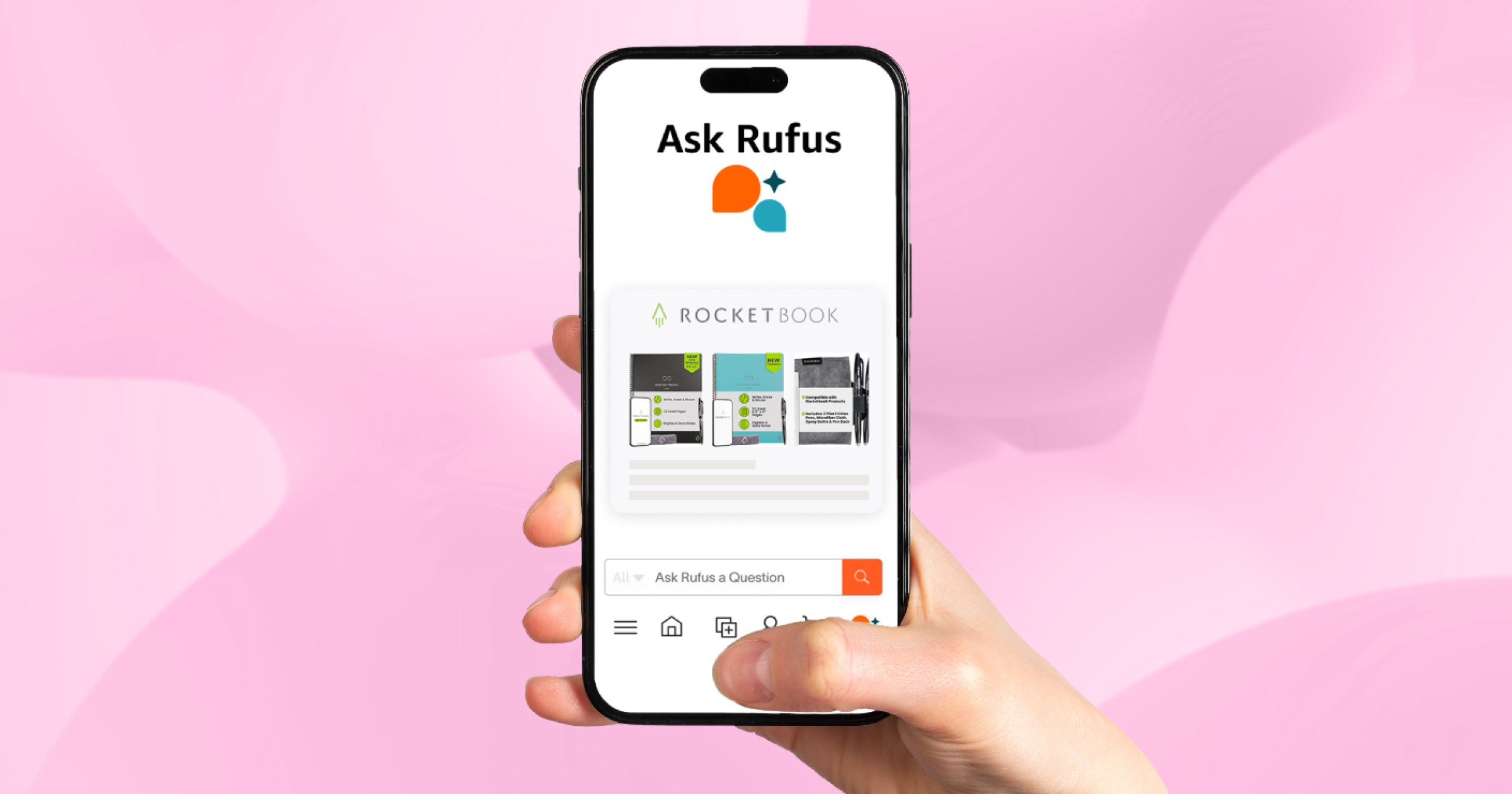
In 2024, Amazon deployed Rufus, a conversational AI shopping assistant trained on Amazon's product catalog, review corpus, community Q&As, and web content. By Q3 2025, Amazon reported over 250 million shoppers had used Rufus, with those shoppers converting at 60% higher rates. The incremental annualized sales impact from Amazon's earnings call: $10 billion.
Those aren't soft engagement metrics. That's transaction-level signal showing a meaningful share of purchase decisions now route through a conversational interface instead of a search bar.
Understanding the mechanism matters more than the headline numbers. So let me walk through how the system works, what it means for your content architecture, and what to do about it.
The Technical Flow: How Rufus Processes a Query
Think of Rufus like a translation layer between natural language and Amazon’s product database. When a shopper types “What’s a good protein powder for someone who’s lactose intolerant and doesn’t like chocolate?”, here’s what happens under the hood:
Intent extraction. The model parses the query into structured parameters — product category (protein powder), constraints (no dairy, no chocolate flavor), use case (dietary restriction).
Knowledge graph lookup. Those parameters hit Amazon’s product knowledge graph, which includes listing content, A+ modules, reviews, Q&A data, and — critically — COSMO’s inference layer (more on this below).
Result generation. Rufus assembles a conversational response with product recommendations, contextual reasoning, and comparison data.
Refinement loop. Follow-up questions maintain session context. The shopper can narrow or redirect without starting over.
The key difference from keyword search: Rufus doesn’t match tokens. It infers relationships. It maps “lactose intolerant” to whey-free ingredients, plant-based protein sources, and review mentions of dairy sensitivity. Your product can surface for queries containing none of your indexed keywords — if your content ecosystem provides the right contextual signals.
This is a structural change in how discoverability works, not a feature update.
COSMO: The Inference Engine Under Rufus
Rufus is the interface. The engine underneath is COSMO — Common Sense Knowledge for eCommerce — documented in a SIGMOD 2024 research paper from Amazon’s search science team.
COSMO solves a specific problem: the gap between what shoppers type and what they mean. A query like “32 oz stainless steel water bottle” is explicit — traditional search handles it fine. But “water bottle for hiking in hot weather” is implicit. The shopper hasn’t specified insulation, capacity, or material. They expect the system to infer those requirements.
COSMO encodes these inferences as structured triplets: product type → attribute → context. For example:
Protein Powder → Ingredient Source → Dairy-free lifestyle → maps to: plant-based, pea protein, hemp protein, rice protein
Desk Fan → Noise Level → Office-appropriate → maps to: quiet operation, compact size, neutral aesthetics
Exercise Equipment → Installation → Apartment-friendly → maps to: no permanent mounting, compact footprint, low noise
These aren’t keyword relationships. They’re conceptual associations learned from product catalogs, purchase behavior, review language, and web data. When Rufus receives an implicit query, COSMO provides the inference layer that translates context into product attributes.
The practical implication: COSMO can surface your product for contextual queries your listing never explicitly addresses — as long as your content ecosystem contains the right attribute signals.
What Changes for Organic Ranking
Two things are true simultaneously: A10 still drives keyword-based ranking, and a growing share of discovery now bypasses keyword search entirely.
What hasn’t changed: Title, bullet points, backend search terms, and description still need your target keywords. Sales velocity, conversion rate, and review quality still drive A10 rank. This remains table stakes.
What’s new:
Contextual content is now discoverable. A+ Content describing use cases, personas, and contexts — “designed for families with allergies,” “ideal for small kitchens” — feeds COSMO’s inference layer. Rufus can surface your product for matching contextual queries even when the shopper’s words don’t overlap with your keywords.
Review language is a ranking input in new ways. COSMO processes review text. If hundreds of reviews mention “great for camping” or “my kids love it,” those are contextual signals that match implicit queries. Review quality now means more than star rating and recency — it includes the vocabulary and context your customers provide.
Q&A feeds the knowledge graph directly. A question like “Is this safe for a 3-year-old?” with a thorough answer gives COSMO a structured data point about age-appropriateness. Most brands treat Q&A reactively. In this architecture, it’s a proactive content channel.
Brand Story and A+ Premium are discovery assets. These modules were historically conversion tools — helping shoppers already on your listing decide to buy. Rufus can now pull from them to contextualize your product in conversational responses. They’ve moved upstream in the funnel.

What Changes for Paid Advertising
The advertising implications follow logically from the discovery shift.
Sponsored Products: Still keyword and product targeted. But when Rufus recommends products directly in a conversational response, the shopper may click through without ever seeing traditional search results. This reduces addressable impression volume for keyword campaigns. The counter-move: invest in the contextual signals that earn organic Rufus placement. Every Rufus recommendation is an impression you don’t have to buy.
Sponsored Brands: Gain relative value. Rufus conversations often link to brand stores and comparison pages. Brands with well-structured Amazon Stores organized around use cases and contexts provide landing pages Rufus can reference. Sponsored Brands campaigns that drive to these stores compound the effect.
Amazon DSP: Becomes the primary top-of-funnel mechanism. If Rufus handles mid-funnel comparison and recommendation, DSP fills the awareness gap — reaching shoppers before they start a Rufus conversation. The interplay works like this: DSP builds familiarity → shopper asks Rufus a contextual question → Rufus recommends your product (boosted by contextual content and reviews) → shopper converts with higher confidence because they already recognize the brand.
At Neato, we’re restructuring ad allocations across our brand portfolio around this layered model. The brands investing in contextual content plus DSP-driven awareness are showing efficiency gains — lower TACOS and higher organic share of voice — that correlate with Rufus adoption rates.
The Optimization Playbook
Here’s what to do, in priority order.
Priority 1: Audit Your Content Through COSMO’s Triplet Structure
For each product, map: Product Type → Attribute → Context.
Ask: What use cases does my listing explicitly address? (“post-workout,” “travel-friendly,” “family meal prep.”) What personas does it speak to? (“busy parents,” “endurance athletes.”) What contexts? (“small apartment,” “outdoor use,” “sensitive skin.”)
If your listing only describes what the product IS — ingredients, dimensions, materials — without describing who it’s FOR and when it’s useful, COSMO’s inference layer can’t connect your product to contextual queries.
Action: Rewrite A+ Content to include at least 5 distinct use-case or persona/context combinations. Use natural language. COSMO parses “perfect for families managing food allergies” more effectively than a keyword string like “allergy free gluten free dairy free soy free.”
Priority 2: Build a Proactive Q&A Strategy
Seed 15–20 questions addressing the contextual queries Rufus is likely to receive. Answer them with detail that includes use cases, persona descriptions, and contextual specifics. Monitor new customer questions and answer within 24 hours.
Priority 3: Analyze Your Review Corpus
Run text analysis on your reviews. Extract the most common contextual phrases — not keywords, but contexts. “My toddler loves it.” “Perfect for my morning routine.” “Survived a week of camping.” These are COSMO signals. If the contexts in your reviews align with queries your target audience would ask Rufus, you’re well-positioned. If they don’t, you may need to adjust your marketing to attract customers who generate the right review language.
Priority 4: Restructure Your Brand Store Around Use Cases
Reorganize from product categories to use cases and personas. Create pages that answer questions: “Best [product] for [context].” Include comparison content Rufus can reference. Internal links to your full catalog and contextual landing pages give Rufus more content surface area to work with.
Priority 5: Shift Ad Budget Toward the Layered Model
If 80%+ of your Amazon ad budget goes to Sponsored Products keyword targeting, that allocation is optimized for 2023. The 2026 model shifts toward DSP (awareness) and Sponsored Brands (brand presence), with Sponsored Products as a conversion safety net.
Action: Run a 90-day test shifting 15–20% of Sponsored Products budget to DSP and Sponsored Brands. Measure branded search volume, organic share of voice, and TACOS. In our portfolio at Neato, brands making this shift see TACOS compression within 60–90 days as organic Rufus-driven discovery offsets reduced keyword spend.
A Concrete Example
A supplement brand selling magnesium glycinate previously optimized for keywords: “magnesium supplement,” “magnesium glycinate 400mg,” “best magnesium for sleep.” A+ Content featured product images, ingredient lists, dosage info. Standard keyword-era listing.
After optimizing for COSMO/Rufus: A+ modules now address “Why athletes use magnesium for recovery” (fitness use case), “Managing stress and sleep quality naturally” (wellness persona), “Supplements safe during pregnancy — what to look for” (life-stage context), and “Building a nighttime routine for better rest” (behavioral context).
Q&A is seeded with contextual questions: “Can I take this with my other supplements?” and “Is this form of magnesium better for anxiety?” — each answered with detail.
Brand Store pages organized by use case: “Magnesium for Sleep,” “Magnesium for Athletes,” “Magnesium for Stress.”
The result: the listing surfaces for Rufus queries like “what supplement should I take if I’m stressed and not sleeping well?” or “something natural to help with muscle recovery after running” — queries containing none of the original target keywords but matching the contextual signals across the content ecosystem.
That’s the shift. Keyword optimization captures demand from shoppers who know what they want. Contextual optimization captures demand from shoppers who know what they need. Those are frequently different populations, and the second one is growing faster.
Two Audiences, One Content Strategy
The operational takeaway: brands now publish for two audiences simultaneously.
Human shoppers need clear value propositions, compelling imagery, social proof, and differentiation. Unchanged.
AI systems — Rufus, COSMO, and whatever Amazon builds next — need structured contextual data: use cases, personas, attributes, contexts, written in natural language that inference engines can parse and relate.
The good news is these requirements are complementary. Content that explains who a product is for and when it’s useful serves both. This isn’t a bolt-on SEO exercise — it’s a content architecture decision that compounds over time.
The shift from keyword matching to intent understanding is the most significant change to Amazon’s discovery infrastructure in a decade. The brands that restructure their content now will compound advantages. The ones that keep optimizing exclusively for keywords will see organic visibility erode as Rufus handles an increasing share of shopping journeys.
The architecture has changed. Your content strategy should change with it.
Frequently Asked Questions
What is Amazon Rufus and how does it work?
Amazon Rufus is a conversational AI shopping assistant that processes natural-language questions from shoppers and returns product recommendations with contextual explanations. Unlike traditional keyword search, Rufus extracts intent, constraints, and context from queries, then consults Amazon's product knowledge graph — including COSMO — to generate relevant recommendations.
What is Amazon COSMO?
COSMO (Common Sense Knowledge for eCommerce) is Amazon's commonsense knowledge graph, described in a SIGMOD 2024 research paper. It encodes conceptual relationships between products, attributes, use cases, and contexts — enabling Amazon's systems to understand implicit queries like "good for camping" or "apartment-friendly" without requiring those exact keywords in product listings.
How do I optimize my Amazon listing for Rufus?
Focus on contextual content: expand A+ Content to address specific use cases, personas, and contexts. Optimize Q&A with thorough answers to contextual questions. Analyze review language for COSMO signals. Build your Brand Store around use cases rather than product categories. Shift advertising budget toward DSP and Sponsored Brands to build the awareness that makes Rufus recommendations more effective.
Does Rufus replace Amazon's A10 search algorithm?
No. A10 remains the foundation of Amazon's search ranking, and keywords, sales velocity, and conversion rate are still critical ranking factors. Rufus adds a conversational discovery layer on top of A10, creating a new pathway for shoppers to find products through contextual and intent-based queries rather than keyword searches.
How does Amazon Rufus affect advertising strategy?
Rufus reduces the addressable impression volume for keyword-targeted Sponsored Products by diverting some shopping journeys to conversational discovery. Brands should shift budget toward DSP (awareness) and Sponsored Brands (brand presence), while investing in contextual content that earns organic placement in Rufus recommendations — which is effectively free advertising.


