
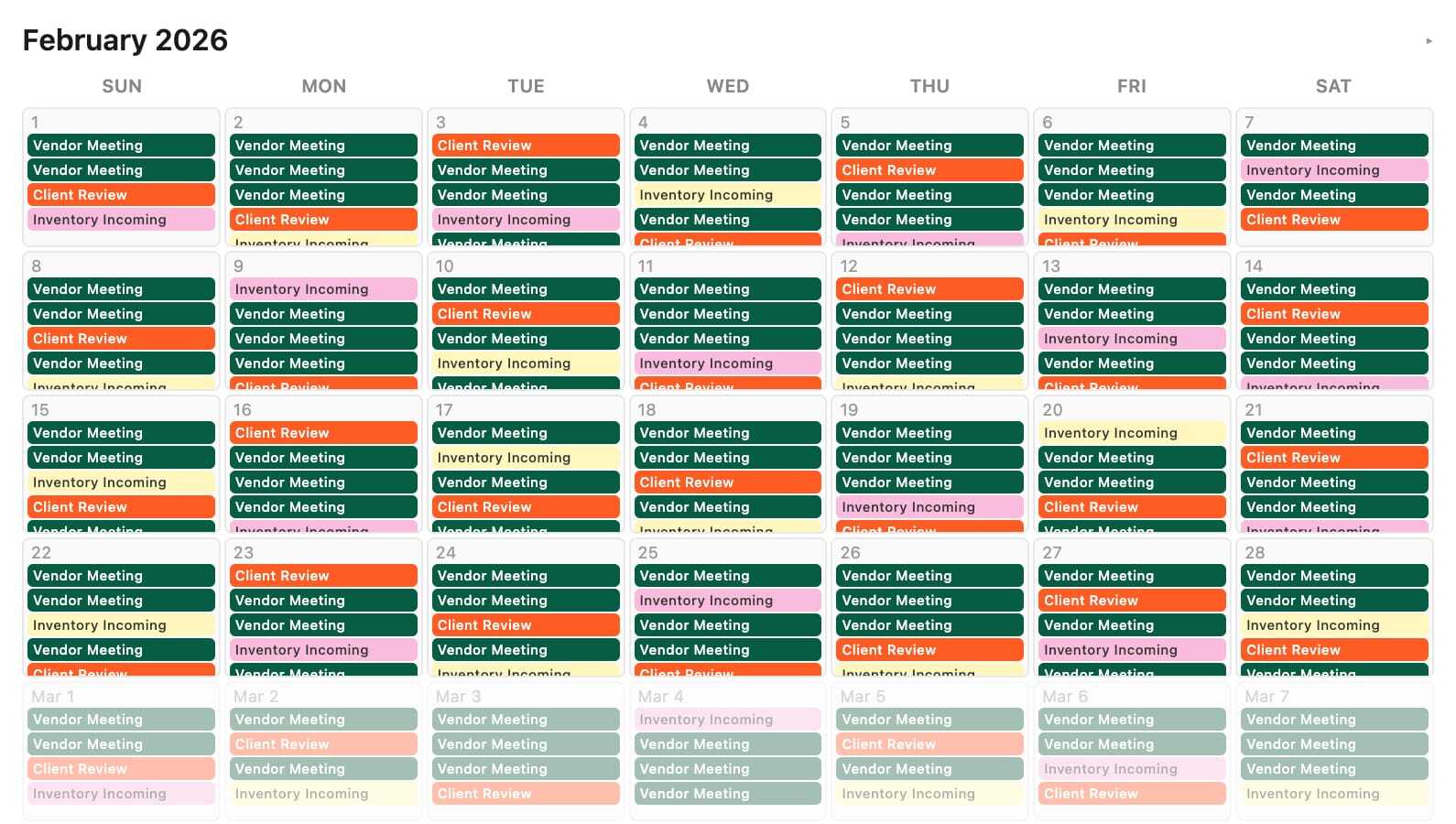
Q1 vendor negotiations are the most expensive recurring meeting on your calendar, not because of what gets negotiated, but because of what doesn’t get done while leadership is negotiating. McKinsey estimates that cross-cutting management processes consume 40 to 65 percent of management and overhead time. For brands holding their own inventory on Amazon, vendor negotiations are one of the biggest contributors.
These conversations consume CFO and COO attention, generate prep decks, escalation calls, and alignment meetings that crowd out everything else. And most years, they change almost nothing. Vendor negotiations persist not because they materially shift outcomes, but because they give leaders something concrete to do inside an environment that already feels fragile.
That’s not a failure of execution. It’s a feature of how vendor relationships work on Amazon. And it’s a distinction worth examining, because the real cost isn’t what gets negotiated. It’s what doesn’t get built while everyone’s negotiating.
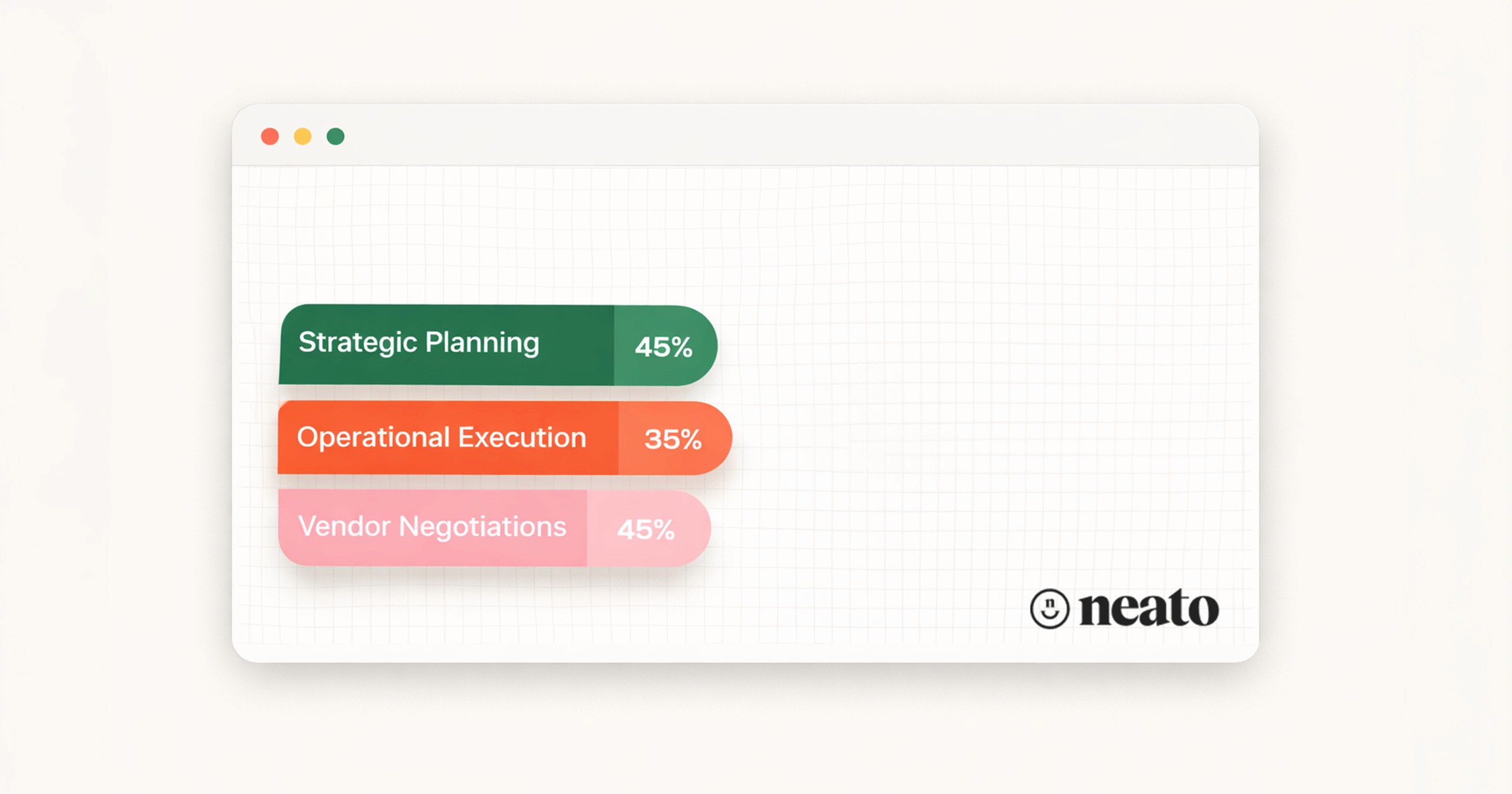
Where Leadership Time Goes
Why Negotiations Consume Strategic-Level Attention
Vendor negotiations feel important because they concentrate uncertainty into a single moment.
Pricing. Fees. Commitments. Forecasts. All compressed into conversations where leaders feel pressure to "get it right," even when the range of outcomes is narrow.
In complex environments, people gravitate toward moments that feel decisive. Negotiations offer that feeling, even when the decisions themselves don't materially change the trajectory of the business.
What quietly happens every Q1: senior leaders get pulled into negotiations that feel strategic, even when they don't meaningfully alter what happens next quarter.
That's not a failure of judgment. It's a predictable response to complexity. When most of Amazon feels opaque or out of reach, negotiations become one of the few places where executives can apply direct pressure. They offer immediate reaction in an otherwise slow-moving environment.
The problem isn't that negotiations feel strategic. It's that they consume strategic-level attention while delivering operational-level impact.
Why Executive Attention Gets Pulled In
By the time negotiations reach senior leadership, they're no longer about line items or terms. They're about risk.
That's why executives get pulled in, not because they enjoy negotiating, but because these conversations sit at the intersection of money, visibility, and accountability. When something feels exposed, attention follows.
What starts as operational coordination escalates quickly:
Prep requires alignment across teams that don't normally sync
Decisions require context leaders don't have time to rebuild
Small changes demand big conversations because nothing feels isolated anymore
Before long, Q1 becomes less about forward planning and more about managing negotiations that crowd out everything else.
Research from the American Psychological Association shows that context switching between complex tasks carries a measurable cognitive cost, with refocus time increasing proportionally to task complexity. For senior leaders toggling between vendor negotiations and strategic planning, the switching tax compounds across every meeting on the calendar.
No one tracks the hours spent preparing, escalating, reviewing, and revisiting negotiations that reset every year. But leadership feels the cost immediately.
Why "Getting Better at Negotiating" Doesn't Fix the Frustration
Most teams respond to this tension by sharpening tactics.
Better prep. Better leverage arguments. Better escalation paths. More senior involvement earlier.
But even when negotiations go well, they still demand the same amount of senior attention. The same meetings. The same cycles.
Last year's hard-fought 2-point margin improvement gets wiped out by Q4 fee changes. Amazon's take rate has climbed steadily over the past decade, and fulfillment fees continue rising into 2026. This year's pricing concession requires the same escalation path, the same executive involvement, the same prep decks. The leverage gained doesn't carry forward.
That's why experienced operators often feel the most frustration. Not because they're bad at negotiating, but because they know the effort rarely compounds. What worked last year doesn't make this year easier. The relationship improvements don't reduce next quarter's workload.
The work just resets.
And reset work, no matter how well executed, creates a specific kind of fatigue that's hard to justify when every other part of the business is calling for senior attention.

The Hidden Opportunity Cost
The Real Cost Isn't Margin, It's What Gets Displaced
Margins are visible. Attention isn't.
The cost of Q1 vendor negotiations shows up in ways that never make it into a P&L review:
What Q1 Vendor Negotiations Actually Cost:
Calendar saturation across senior leaders: hours of prep, alignment, and review meetings that displace forward-looking work
Constant context switching between operational firefighting and strategic negotiations
Escalation loops that stall momentum: decisions that could move forward get caught in approval cycles because stakes feel high
Decision fatigue from revisiting familiar ground: the same arguments, the same leverage points, the same outcome ranges as last year
Strategic work deferred indefinitely: product launches delayed, new channel expansion tabled, hiring decisions pushed to Q2. The work that compounds gets sacrificed for the work that resets.
These costs don't appear in a deck. They show up as slower decisions and growth initiatives that quietly slip while attention flows toward negotiations.
A landmark study by Harvard Business School researchers Michael Porter and Nitin Nohria, tracking CEO time allocation over 12 years, found that executive attention is chronically misallocated toward reactive processes at the expense of strategic priorities. Vendor negotiations fit that pattern precisely: high-visibility, low-compounding work that crowds out the decisions that actually move the business.
No one tracks the hours spent preparing, escalating, reviewing, and revisiting negotiations that reset every year. But leadership feels the cost immediately, not just in calendar time, but in what doesn't get built while everyone's negotiating.
Unless someone else owns the inventory.
When a retail operator holds the inventory risk, vendor negotiations become their operational reality, not yours. The annual cycle still happens. The terms still matter. But the weeks of executive attention? That stays focused on your brand's strategic growth, not Amazon's vendor management calendar.
What Changes When You Exit
The Quiet Frustration Leaders Rarely Say Out Loud
There’s a shared internal monologue that doesn’t always make it into leadership meetings:
This shouldn’t take this much time.
We did this last year.
Why does this require me again?
How is this the best use of my week?
The discomfort isn’t about competence. It’s about proportion. When work feels unavoidable but not valuable, frustration follows, even if outcomes are technically “fine.”
Senior leaders in e-commerce are managing unprecedented complexity. Their attention is the scarcest resource in the business.
Vendor negotiations don’t feel like the highest-value application of that resource. But they feel unavoidable.
That gap between what feels necessary and what feels valuable is where Q1 frustration actually lives.
Normal Doesn’t Mean Cheap
Vendor negotiations are normal. So is the fatigue that comes with them.
The danger isn’t that these conversations exist. It’s that their true cost is rarely acknowledged. Repetition gets mistaken for rigor. Visibility gets mistaken for leverage. Busyness gets mistaken for progress.
The most expensive work often isn’t the work that fails. It’s the work everyone assumes is unavoidable.
When vendor negotiations reset every year, when they pull the same executives into the same rooms to debate the same margins, when they consume weeks of collective attention without compounding, that’s expensive.
Not because the work is done poorly. But because the opportunity cost is never calculated.
What Q1 Negotiations Are Actually Signaling to Leadership
Vendor negotiations aren’t broken. They’re doing exactly what the environment around them encourages.
Recurring conversations become the default when complexity makes delegation feel risky. When Amazon’s operational reality creates situations where executives feel they need to be involved because stakes are too high to delegate, negotiations fill that void. They become the one lever that feels tangible when everything else feels out of reach.
But the frustration executives feel every Q1 is a signal, not of poor execution, but of how expensive attention has become in modern e-commerce.
When the same work resets year after year, consuming the same hours and producing the same incremental outcomes, leaders aren’t wrong to question the cost. And in 2026, expensive attention might be the cost enterprise teams can least afford.
The 2P retail operator model exists for exactly this moment: one partner who purchases inventory, becomes the seller of record, and absorbs vendor negotiations as part of their operational scope. Your leadership team stops negotiating terms and starts building the business.
Explore how the 2P model works →
Why Do Q1 Amazon Vendor Negotiations Consume So Much Executive Time?
Because they concentrate risk, visibility, and accountability into discrete moments within an otherwise complex and opaque Amazon environment. The real cost isn’t the negotiated margins. It’s the opportunity cost of senior leadership time spent on work that resets annually without compounding strategic value. McKinsey estimates that cross-cutting management processes consume 40 to 65 percent of management and overhead time, and vendor negotiations are among the most attention-intensive of those processes. Brands that shift inventory ownership to a 2P retail operator eliminate the negotiation burden entirely, keeping leadership focused on strategic growth instead of annual vendor cycles.


